What Local Conditions Do
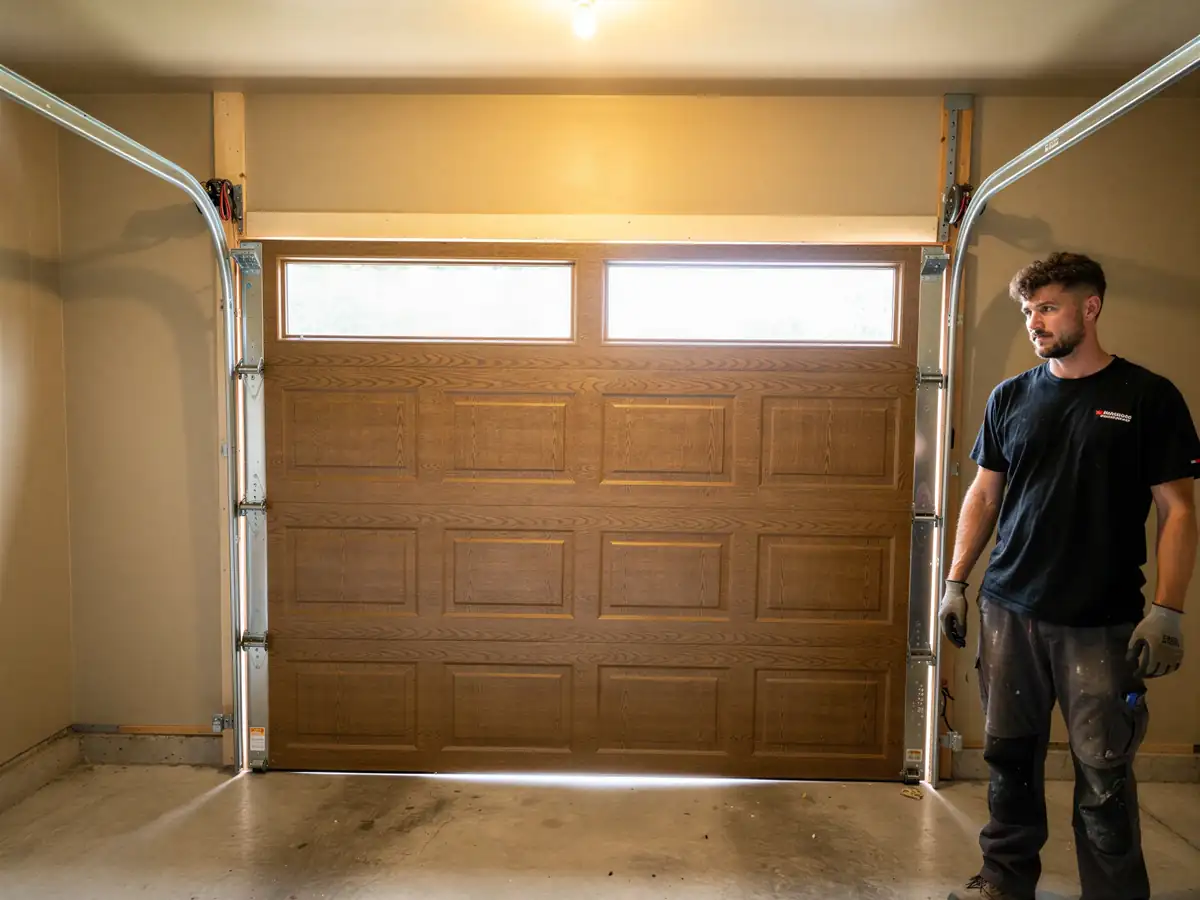
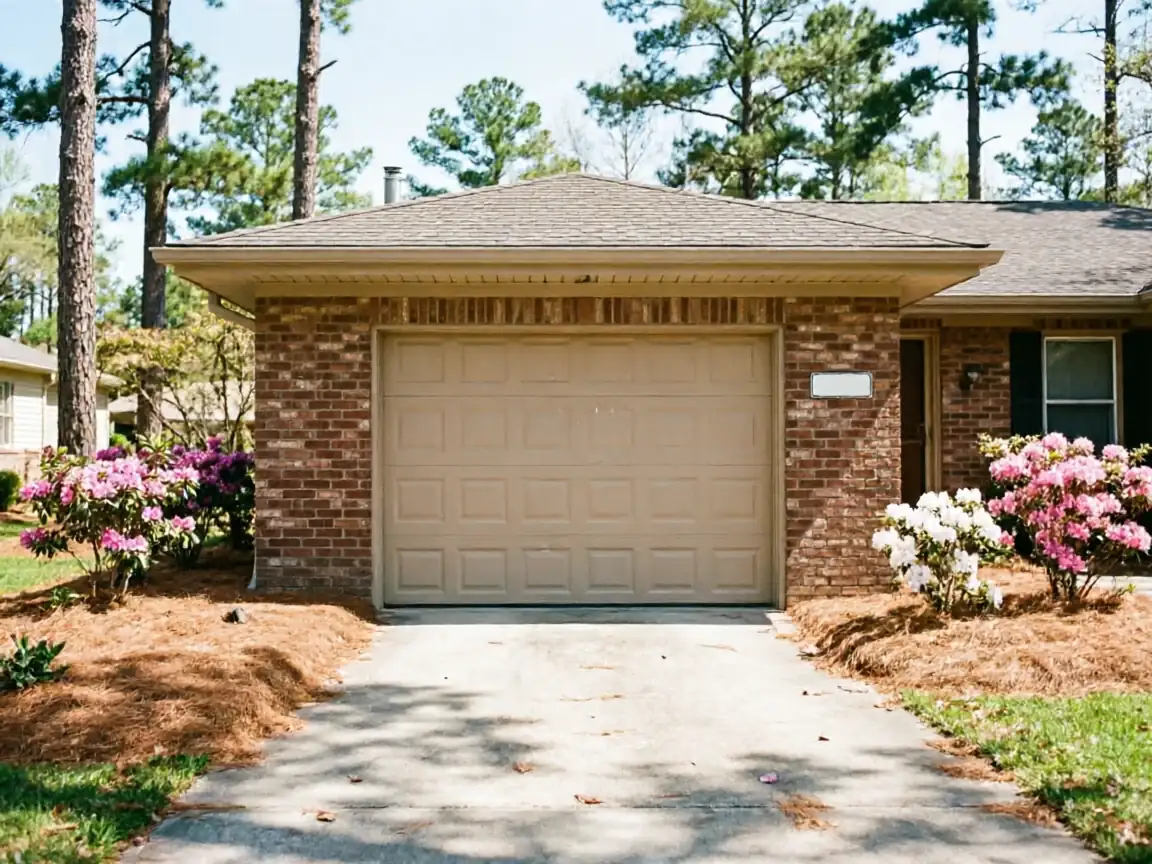
Midlothian's housing was built between 1954 and 2005, with the median home going up around 1979. That matters more than most homeowners think. A door installed in the 1970s or early 80s, before current insulation code, is usually a single layer of steel with no thermal break and no vapor barrier. In the areas around Brandermill (4 mi) and Woodlake (5 mi), a lot of that original stock is still standing, and a lot of those original doors are still on the hinges.
The climate here is a cold-moderate band - not brutal winters, but enough freeze-thaw cycling that an uninsulated steel panel sweats on the inside face during cold snaps. That condensation runs down into the bottom seal and the track, and over a few winters it pits the steel and seizes the rollers. If your garage sits under a bedroom or next to a laundry room, that moisture problem becomes a comfort problem too, not just a door problem.
Houses built later in Midlothian's range - the stuff going up through the 90s and into the 2000s closer to Charter Colony (1 mi NW) - generally came with better door specs out of the box. The age gap inside one service area is wide enough that you can't assume what's behind the siding just because two houses look similar from the street.
When to Get Help
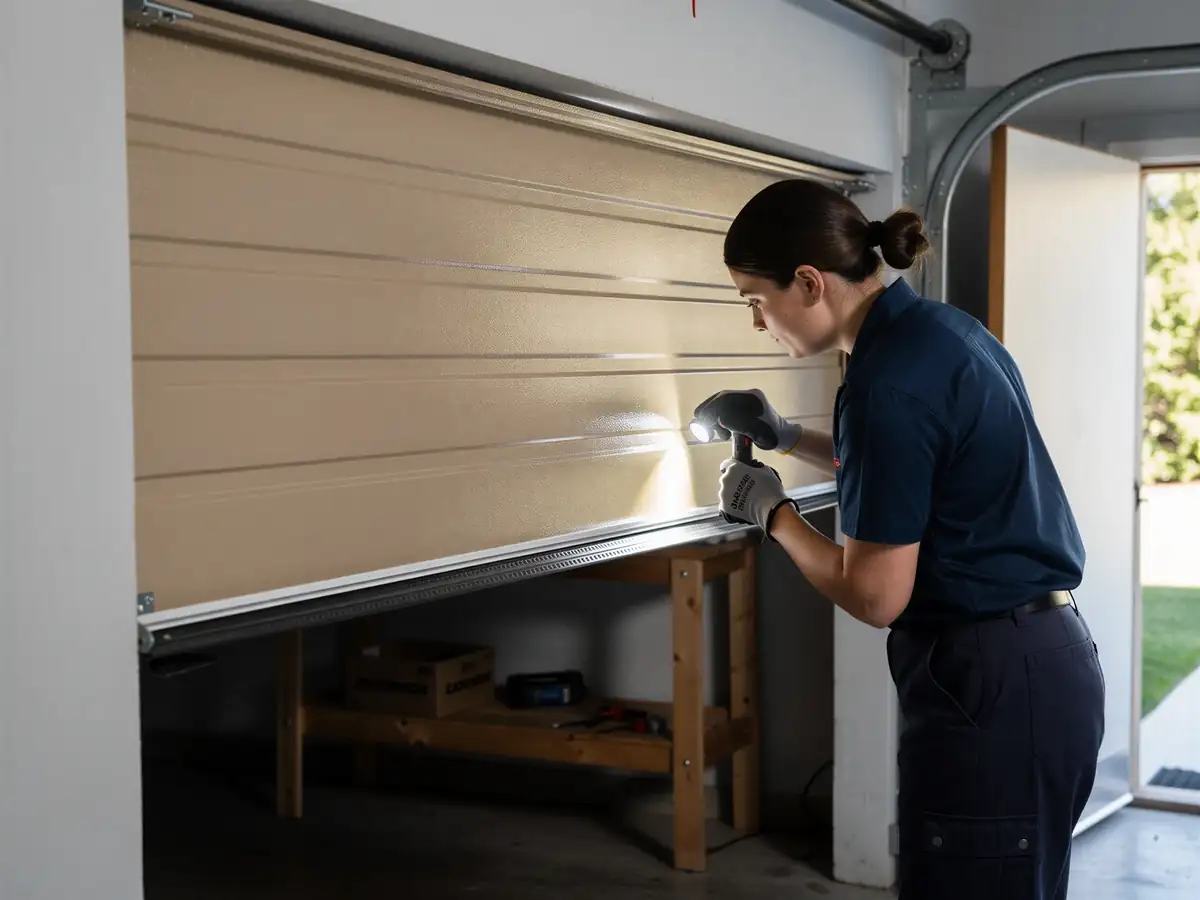
If your door is original to a house built in the 1960s or 70s - which describes a large share of the stock across the 18 named areas here - and you're noticing rust freckling along the bottom panel or the weatherstrip has gone stiff and cracked, that's not cosmetic. It's the sign the steel is starting to take on moisture it was never built to shed.
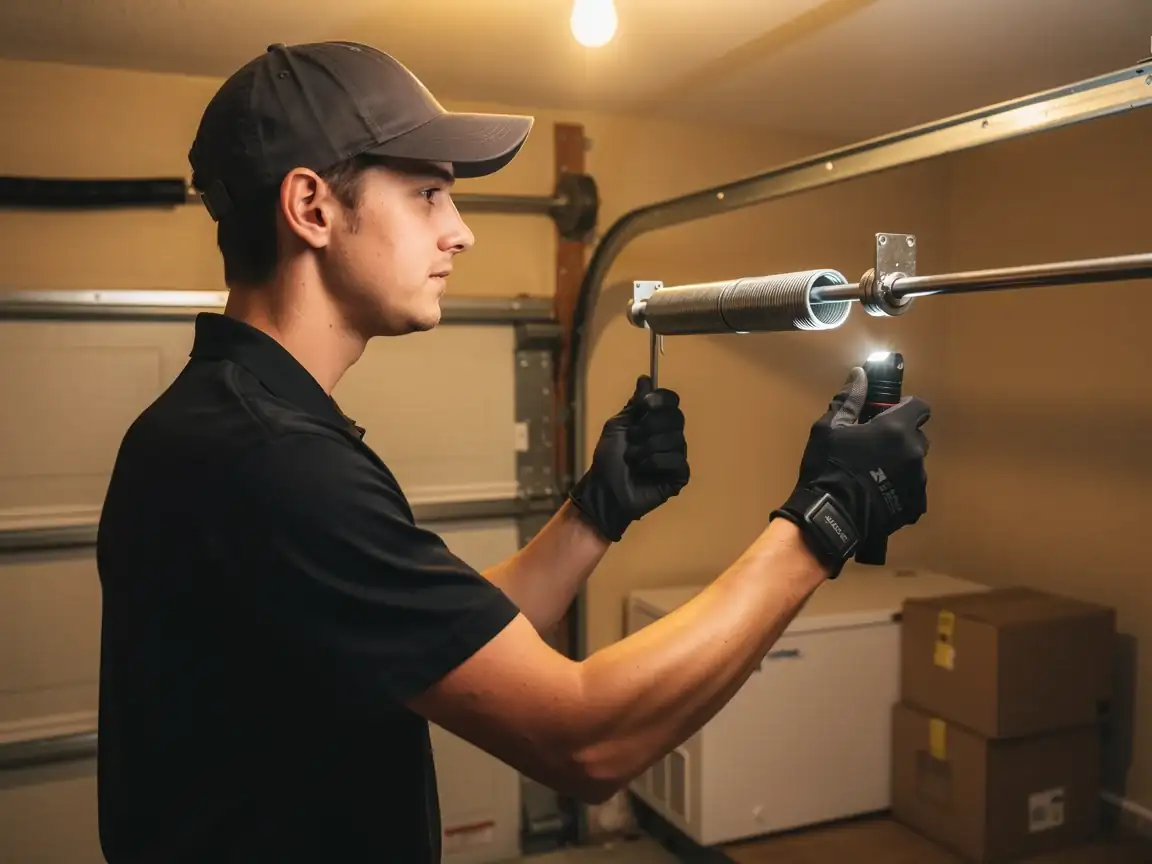
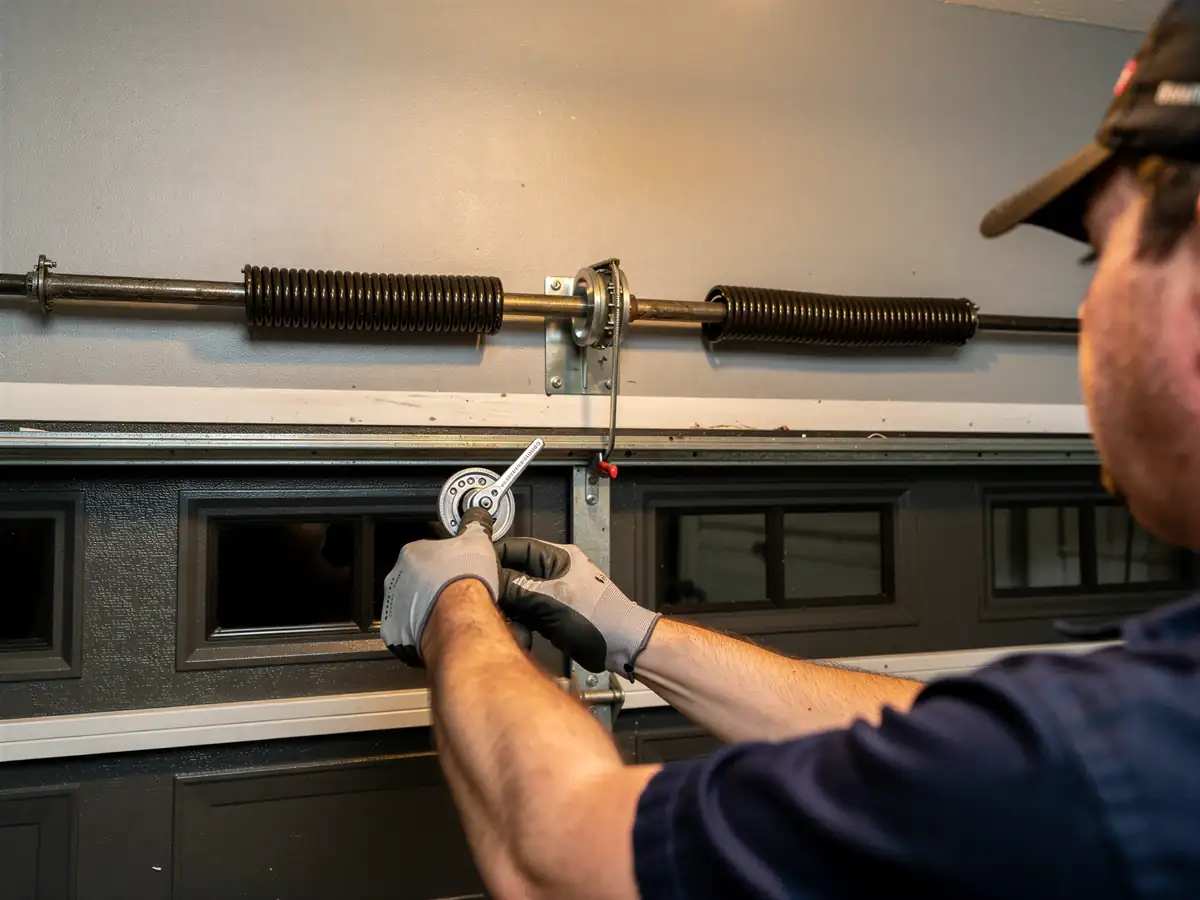
A torsion spring on a door that old is also past any reasonable service life, even if it hasn't broken yet. We don't recommend waiting for the snap. If the door is noticeably heavier to lift by hand than it used to be, or the opener strains and reverses on the way down, that's spring fatigue, and on a door this age it's worth checking before it lets go under load.
Call sooner rather than later if you've got condensation forming on the inside of the panel during cold mornings - that's the uninsulated steel doing exactly what pre-code doors do in this climate band, and it won't fix itself.
What Most People Get Wrong
The most common mistake we see on houses from Midlothian's 1960s-70s wave
People replace a broken spring or a dented panel and call the job done, without looking at whether the door itself is worth keeping. A single-layer steel door from that era, even repaired, is still an uninsulated door with no thermal break. You've fixed the symptom, not the specification.
The second mistake is assuming every house in the area is the same age
Housing here spans five decades - 1954 up through 2005 - so a house near Woodlake and a house near Charter Colony can have completely different door hardware even though they're a few miles apart. Guessing based on a neighbor's door is how people end up ordering the wrong track hardware or the wrong spring wind.
Third: people wait for total failure before calling
On a door this old, a cable fraying or a roller binding is a warning, not background noise.
The Situation
Across this service area there are roughly 32,837 owner-occupied houses out of about 72,105 households, with a median household income of $69,917. That's a wide base of older housing, and a meaningful share of it is carrying a garage door that predates current insulation standards - not a flaw in the house, just a fact of when it was built.
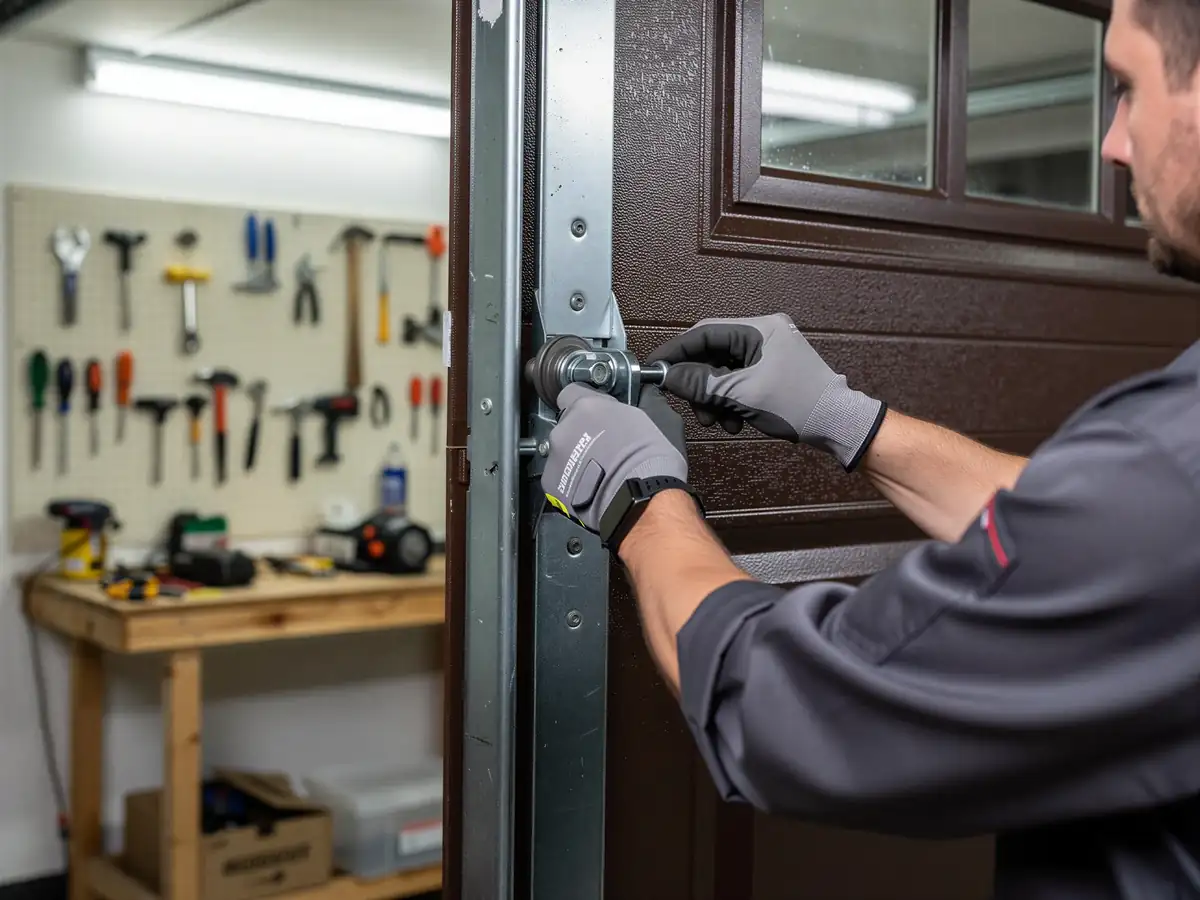
One honest limitation: we don't manufacture insulated replacement panels on site, and matching an obsolete track width from a 1970s install sometimes means a full door swap rather than a patch repair. If parts for your specific era and brand aren't something we stock, we'll tell you that up front rather than stringing out a repair that won't hold.