What Local Conditions Do
Most houses in this part of Midlothian went up between 1954 and 2005, with the bulk of the stock dating to the 1960s and 70s across the eighteen named areas that make up this service area - Brandermill, Woodlake, Bon Air, and the rest. That matters for openers because a house built in 1972 almost never has the same opener it started with, but it often has the same wiring run to the garage, and that run was sized for a chain-drive unit, not for a modern system with battery backup built in.
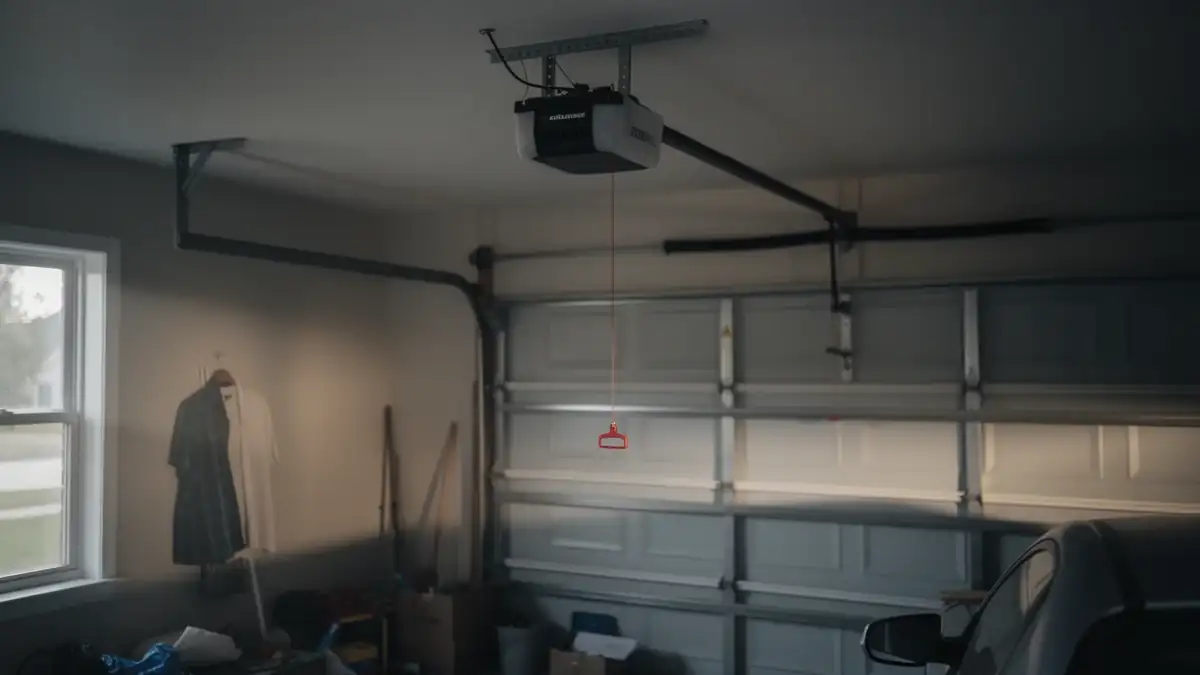
The climate here sits in the cold-moderate band, which means winter cuts the power for hours at a stretch more often than it does in warmer regions, but not often enough that most homeowners think about it until the lights go out and the door won't move. A belt or chain-drive opener without a battery backup is dead the second the power drops. If your opener predates battery-backup standard equipment - which is common in homes built before the 2000s wave of newer construction here - you're relying on the manual release cord until power is back, full stop.
None of this is Midlothian-specific weather drama. It's a straightforward consequence of old wiring meeting an aging opener fleet in a town where winter outages happen on a normal-enough schedule that the gap shows up.
When to Get Help
Call before the next outage, not during one, if you don't know whether your opener has battery backup. Most units built without it can be retrofitted or replaced, and that's a five-minute check, not a big job.
Call right away if the opener runs but the door doesn't move, or moves part way and reverses - that's not a power issue, that's a travel limit or a sensor problem, and it'll strand you at the worst time, which in this area tends to be a winter storm night.
Call if you're in one of the older sections - areas closer to the original 1960s-70s builds rather than the newer construction toward the 2005 end of the range - and you've never replaced the opener. A thirty- or forty-year-old chain-drive unit wasn't built with any backup power option at all, and no retrofit kit exists for some of the oldest models. At that point you're not patching a power problem, you're replacing a unit that's past the end of its working life anyway.
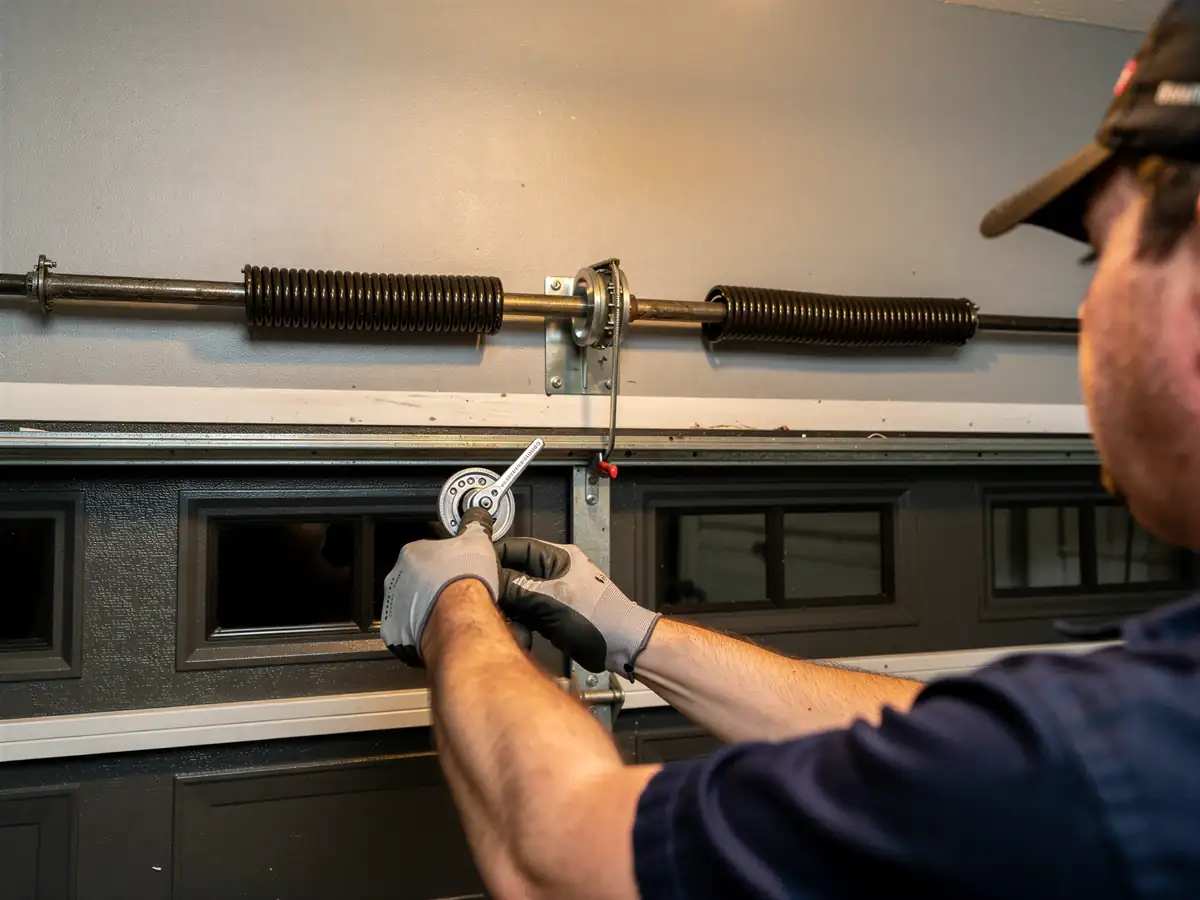
Don't call for a door that simply feels heavy to lift by hand during an outage. That's almost always a spring doing its job under full load with no opener assist - normal, not an emergency, unless the spring itself looks stretched or uneven.
What Most People Get Wrong
The most common mistake is assuming the manual release cord is a backup plan
It's an emergency disconnect, not a way to live for three days. Pulling it lets you lift the door by hand - it does nothing to restore powered operation, and on a heavier insulated door common in newer construction toward the 2005 end of our housing range, lifting it by hand with a family member isn't always realistic.
The second mistake is buying a battery-backup opener and assuming that solves it permanently
Backup batteries degrade, usually inside three to five years, and in a cold-moderate climate like this one, cold nights shorten that further. A battery that tested fine in October can be dead by February, right when an outage is most likely.
The third mistake, specific to the older stock across this service area
Is treating a chain-drive opener from the 1970s or 80s as repairable indefinitely. Parts for units that old are getting harder to source every year, and a homeowner can spend more chasing a replacement gear or circuit board than a new opener with backup power costs outright.
The Situation
Across the roughly 72,100 households in this service area, with about 32,800 of them owner-occupied, the opener fleet skews old simply because the houses do - median build year 1979 means a lot of original or first-replacement equipment is still sitting on the ceiling track. Median household income here is a little under $70,000, which is relevant mainly because a battery-backup retrofit is a modest cost next to full opener replacement, and most households in this range don't need to choose the expensive option by default.
We don't do emergency generator installs or home electrical panel work - that's outside the trade and outside what we'll quote. What we do is tell you honestly whether your opener needs a battery, a replacement, or nothing at all, based on what's actually on your ceiling, not on a sales script.