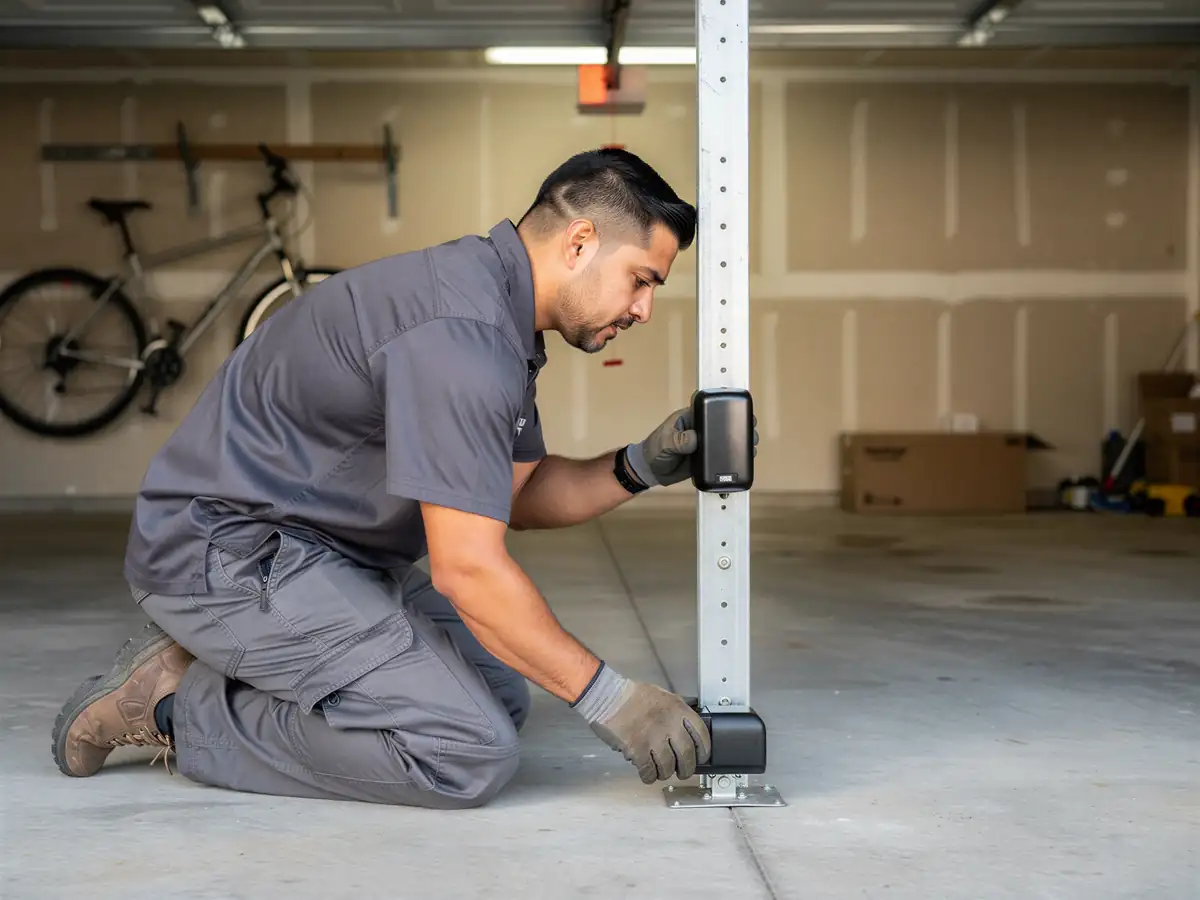
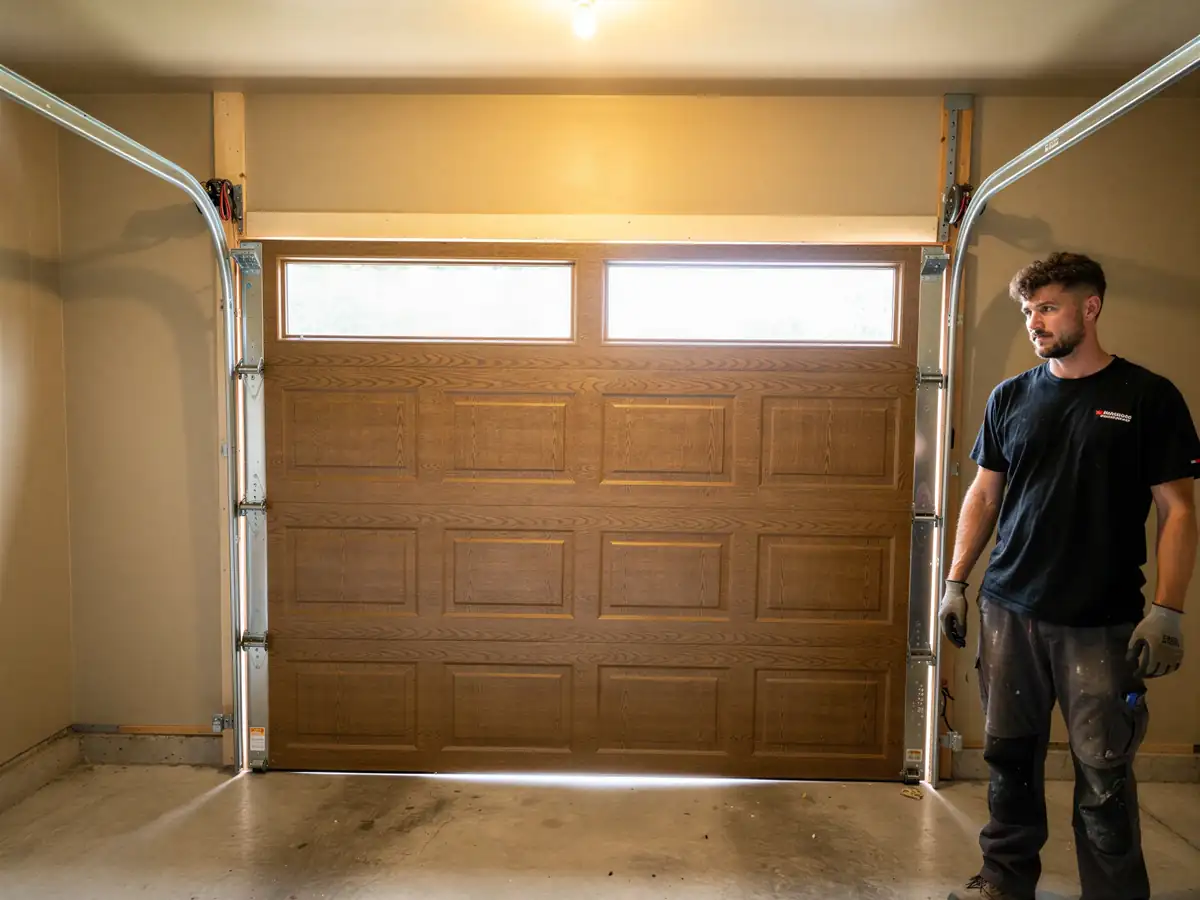
The Symptom
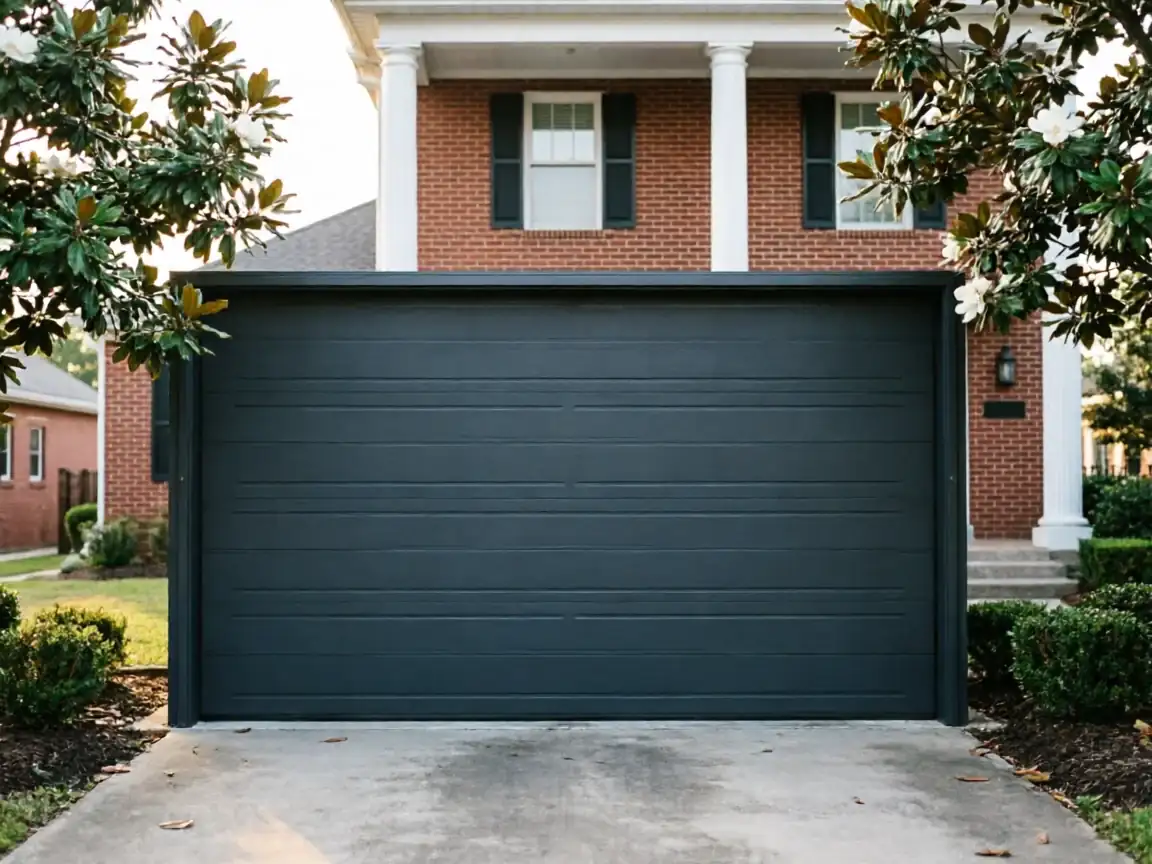
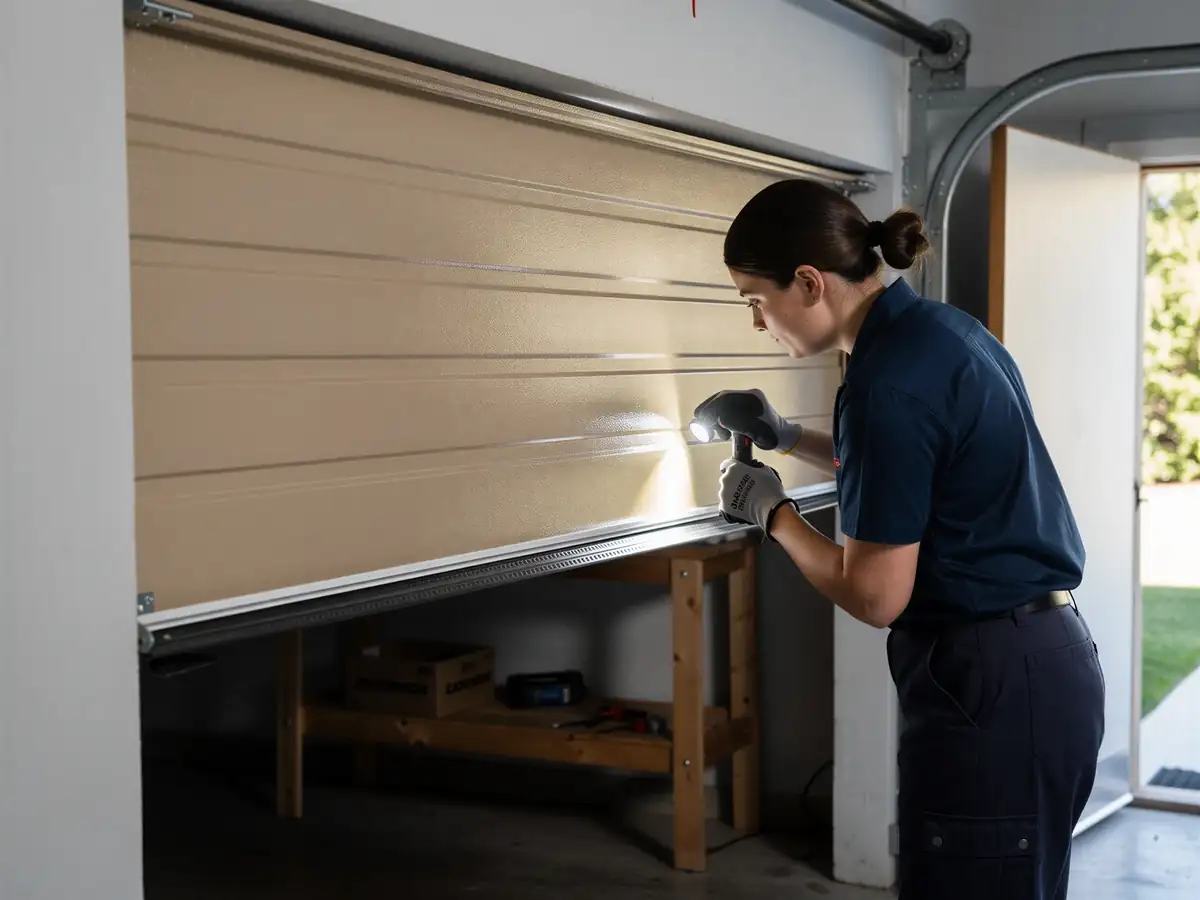
You're not calling about a noise. You're calling because the door is done - it's sagging on one side, the panels are dented past fixing, or you've already replaced the opener twice and the spring is still fighting you. That's an installation call, not a repair call, and it's a different job: new track, new springs sized to the new door, new bottom seal, sometimes a new header if the opening's out of square.
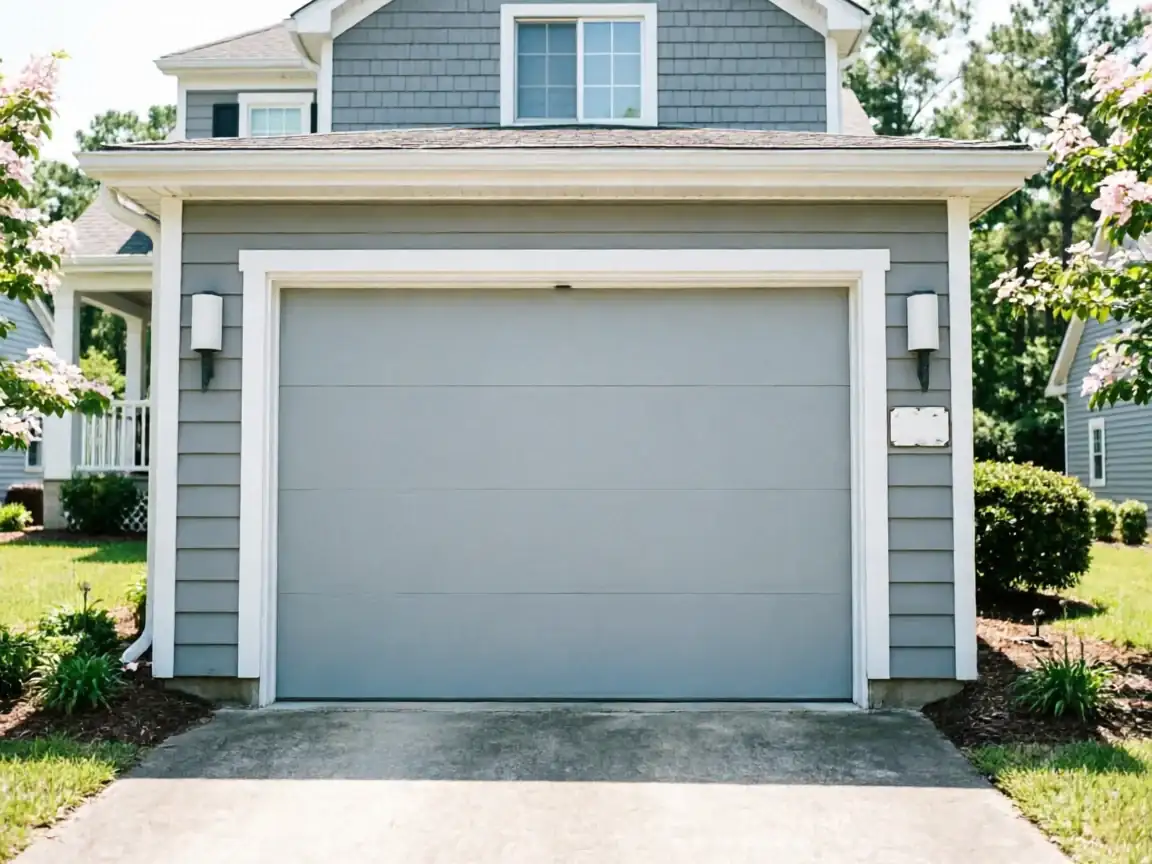
Around Midlothian this shows up a lot in houses where the original door is still hanging - a single steel slab from the 1960s or 70s, thin by today's standard, with hardware that was never built for an insulated door or a modern opener's pull. If your door still has the look of a flat, unribbed panel with a half-century of paint on it, you're probably past the point where a new spring or a new roller fixes the real problem. The door itself has aged out.
Another version of the symptom: the door works fine but your energy bill doesn't. An uninsulated single-layer door in a house built before insulated steel doors were standard is a cold wall with hinges. That's not a repair fix either.
What Causes It Around Here
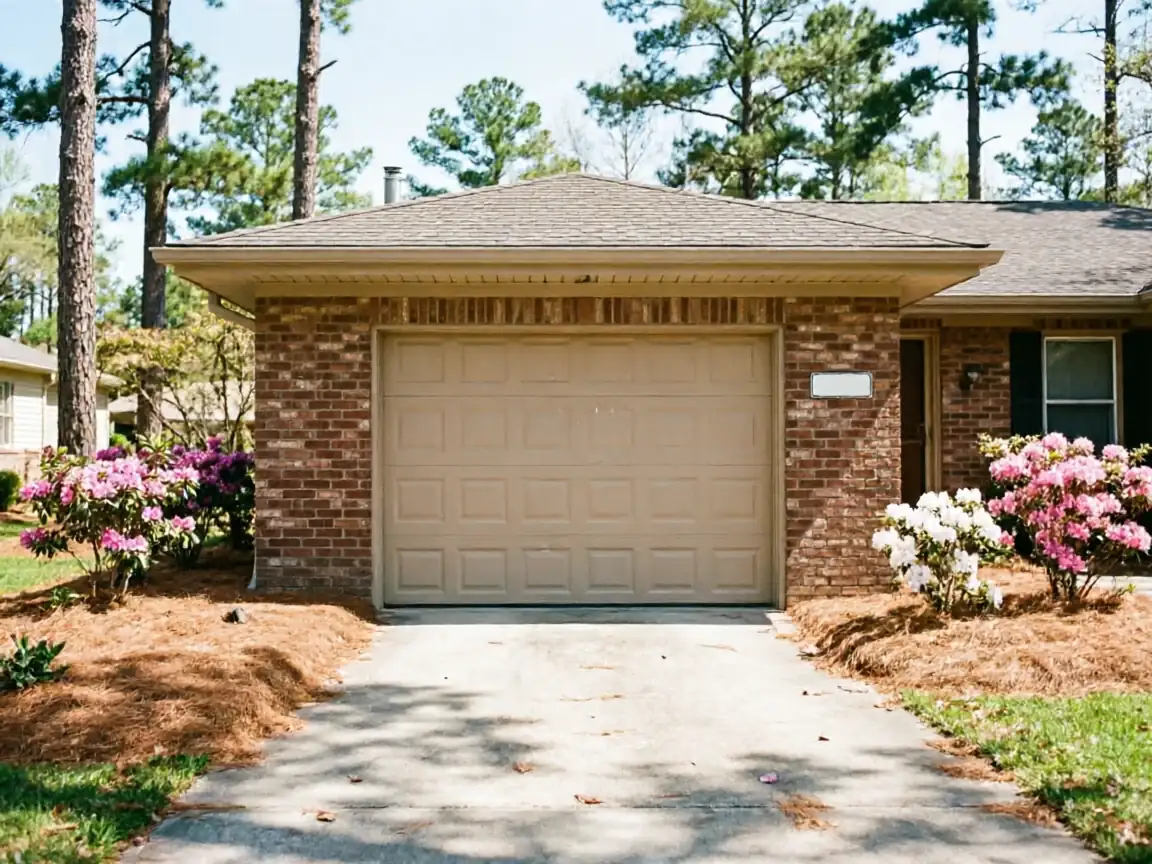
The service area runs from houses built in 1954 up through 2005, with most of the stock dating to the 1960s and 70s across the eighteen neighborhoods we cover. That range matters because garage doors from that era were built to a different standard than what's sold today - thinner steel, no insulation layer, tracks sized for lighter doors and weaker springs. A door from a 1968 build in this area isn't failing because it was installed badly. It's failing because it's lived fifty-plus years in a cold-moderate climate that puts it through real freeze-thaw cycling every winter.
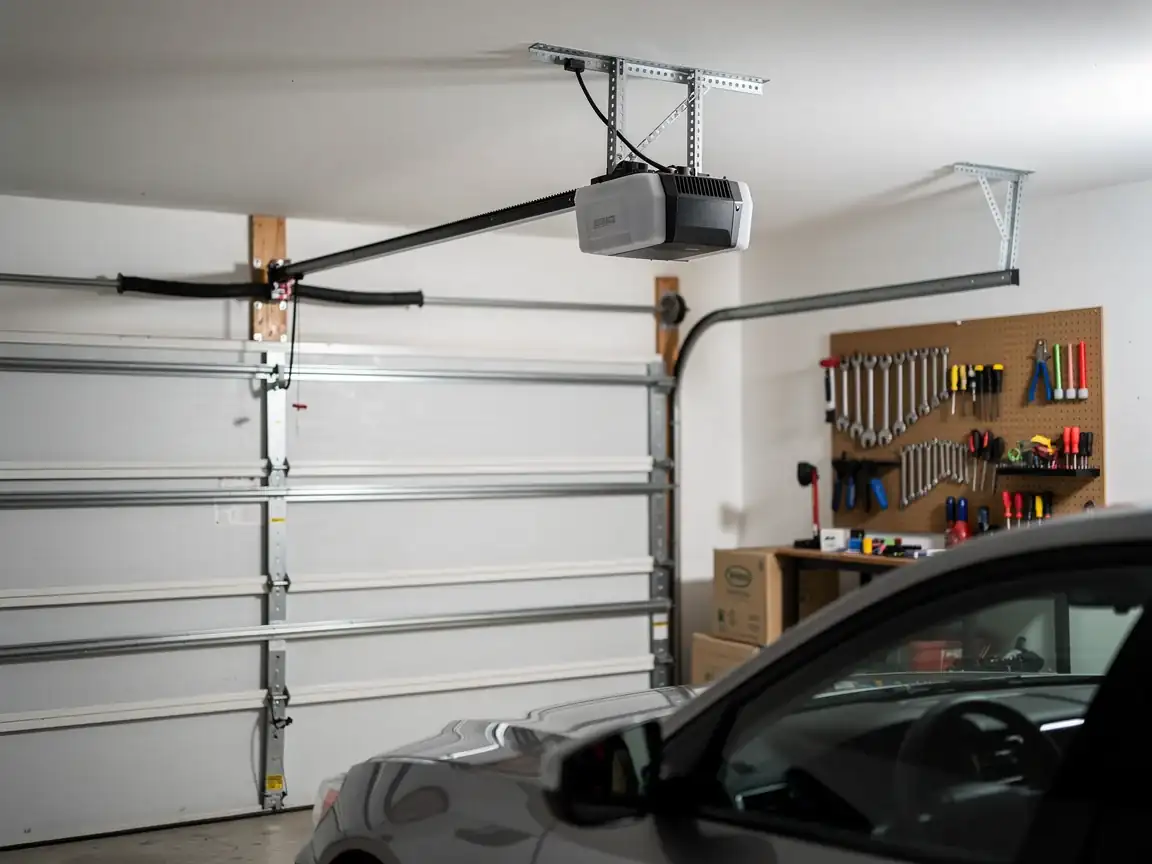
That cycling is the quiet killer. Steel contracts in the cold, expands in the heat, and every seam, hinge pin, and roller track takes a small beating each swing. In a house built in the 1979 median range for this area, that's forty-plus winters of expansion and contraction on original hardware that was never designed for today's heavier insulated panels or belt-drive openers. When a homeowner in Brandermill or Woodlake finally gets a new opener installed, the old track and jamb often can't handle the torque - which is usually the moment the whole door gets replaced instead of just the opener.
The DIY Question
You can buy a garage door kit and install it yourself
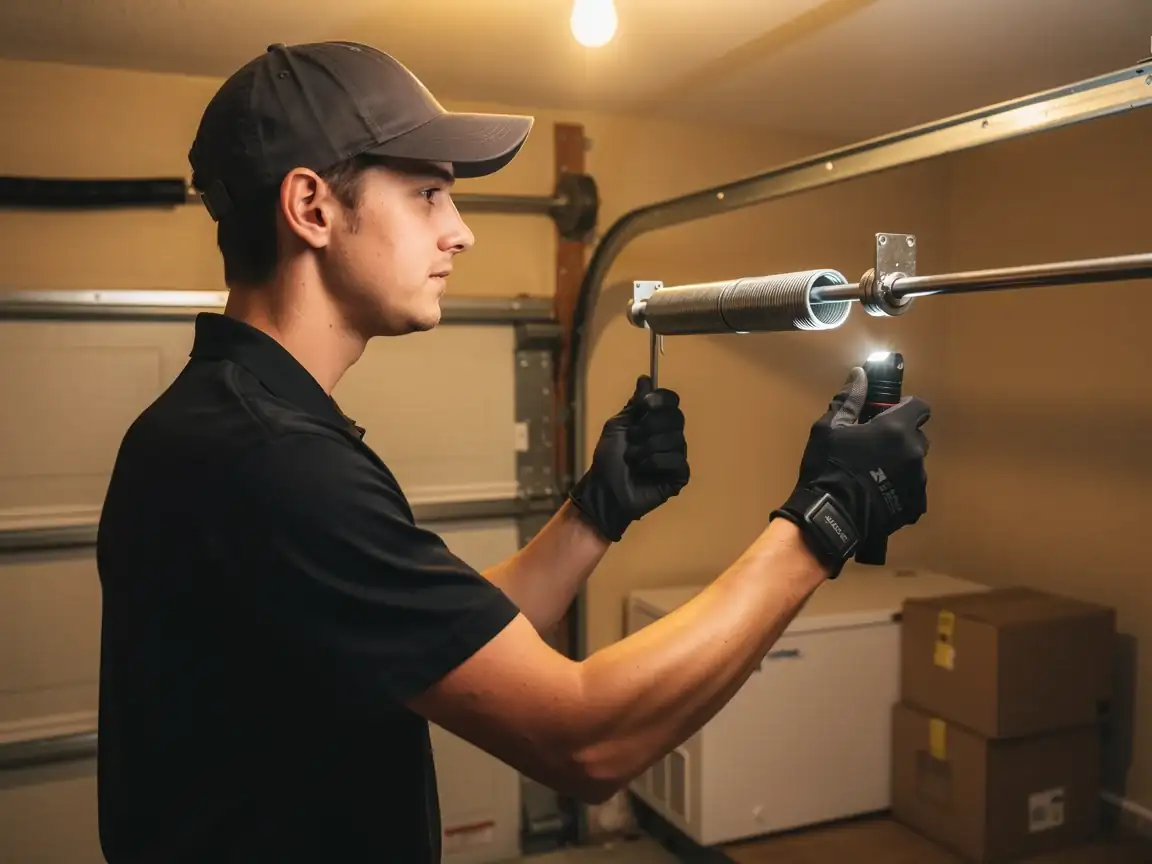
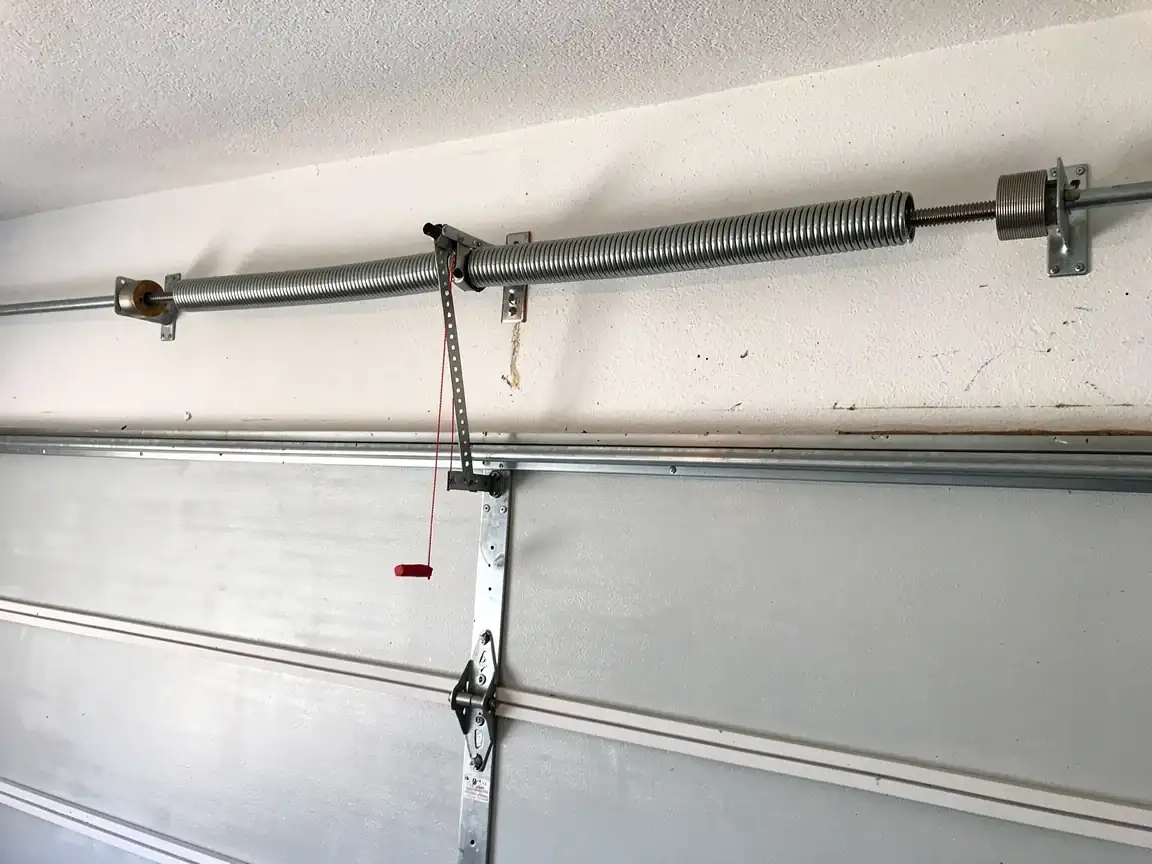
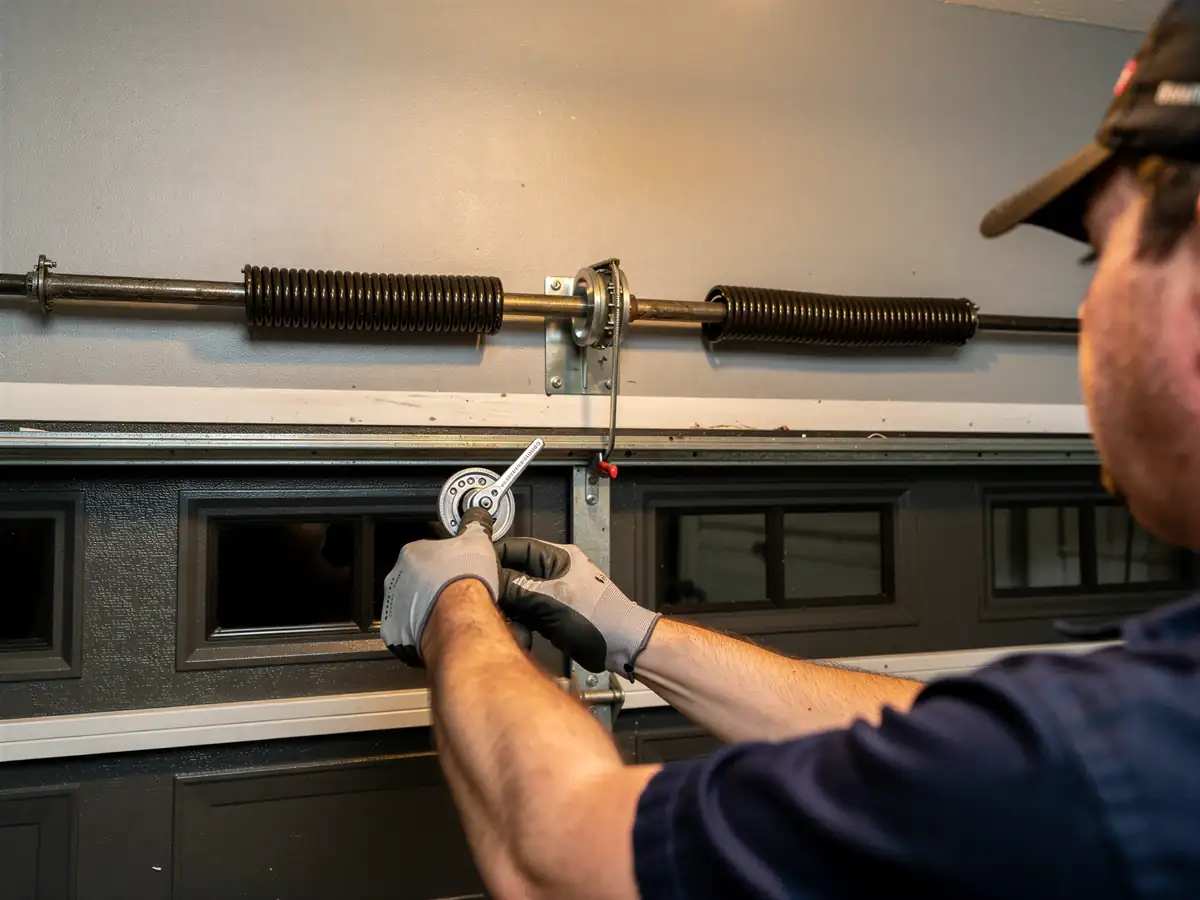
People do. The parts that make it a bad idea aren't the panels - it's the torsion spring. A wound torsion spring on a standard door carries enough stored force to break a wrist or worse if the winding bar slips, and there's no YouTube video that changes the physics of that.
If you're set on doing some of the work yourself, the honest split is this
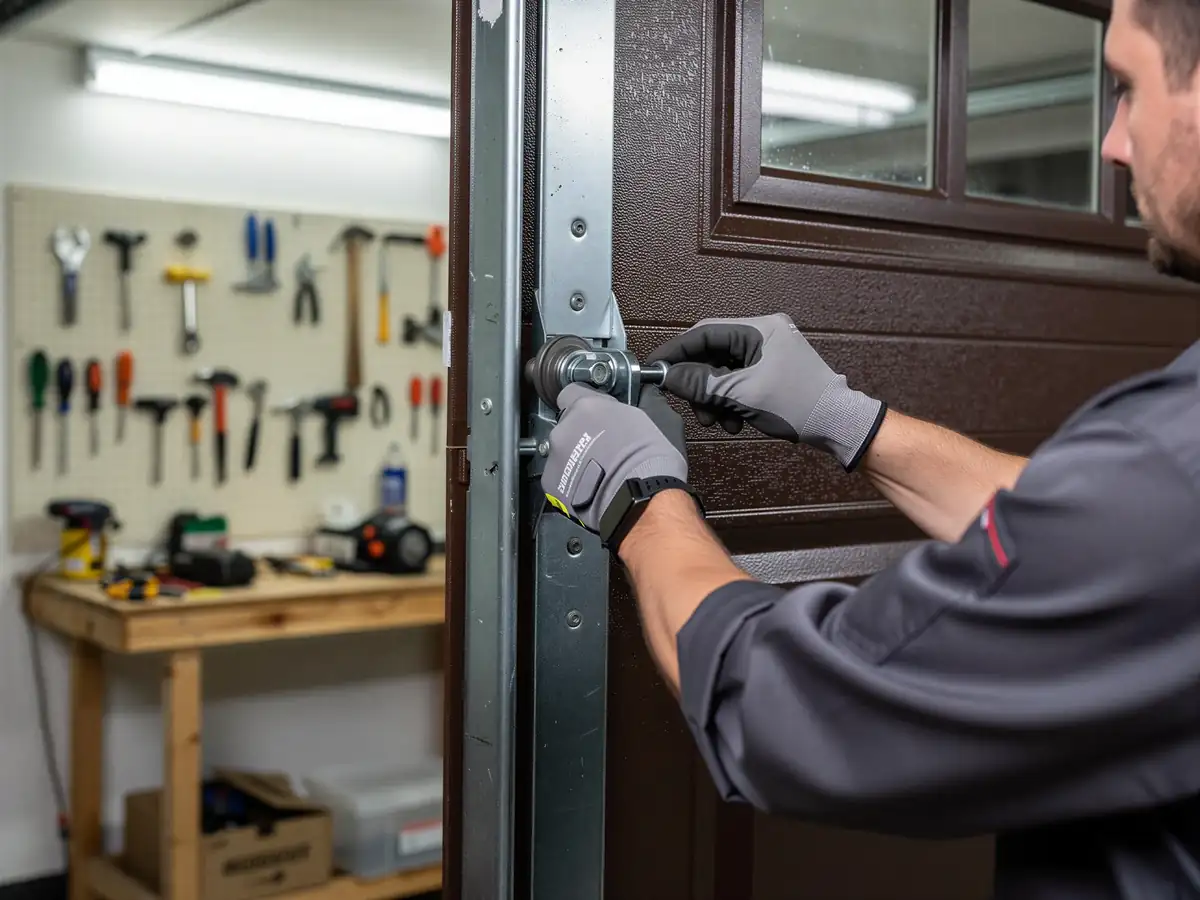
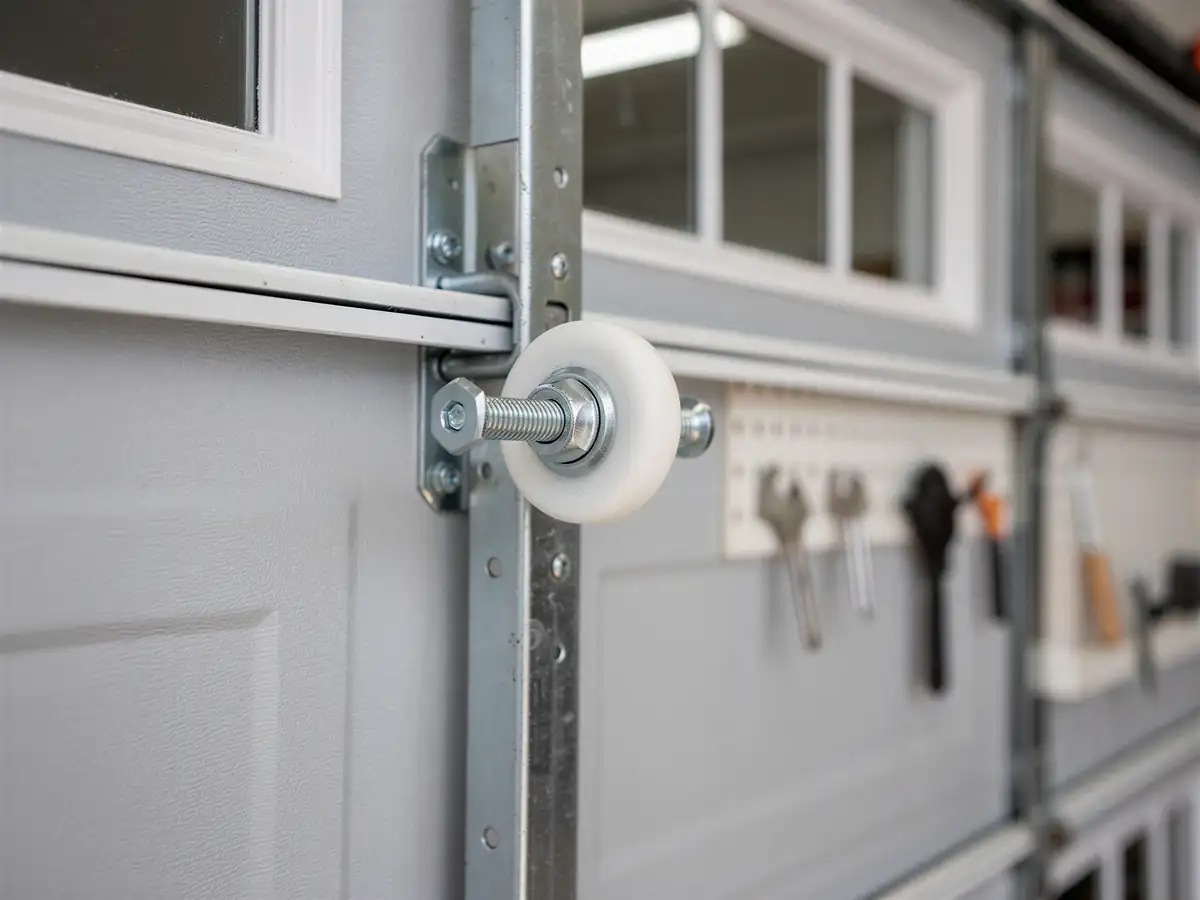
Weatherstripping, bottom seals, and even swapping an opener head unit are within reach for someone comfortable with a drill and a ladder. Setting new track, squaring a jamb that's shifted over fifty years, and winding new springs to match a heavier insulated door are not. We've been called out more than once to finish a job that started as a weekend project and ended with a door that won't seat square in the frame.
Where This Job Goes Sideways
The most common mistake on an install in this area isn't the door - it's the opening. Houses built across the 1954-2005 range here don't all have square, standard-sized openings. Settling over decades, especially in homes nearing the older end of that range, means the jamb has shifted a half-inch or more from where it started. Order a stock door sized off a tape measure without checking square, and you get a door that binds on one side and won't seal on the other.
The second place it goes wrong is springs sized for the old door getting reused on a new, heavier insulated one. An insulated steel door can weigh close to double what the original single-layer door weighed. Put the old torsion spring back on and the opener will strain, the cable will wear fast, and you'll be back to a repair call within a year or two.
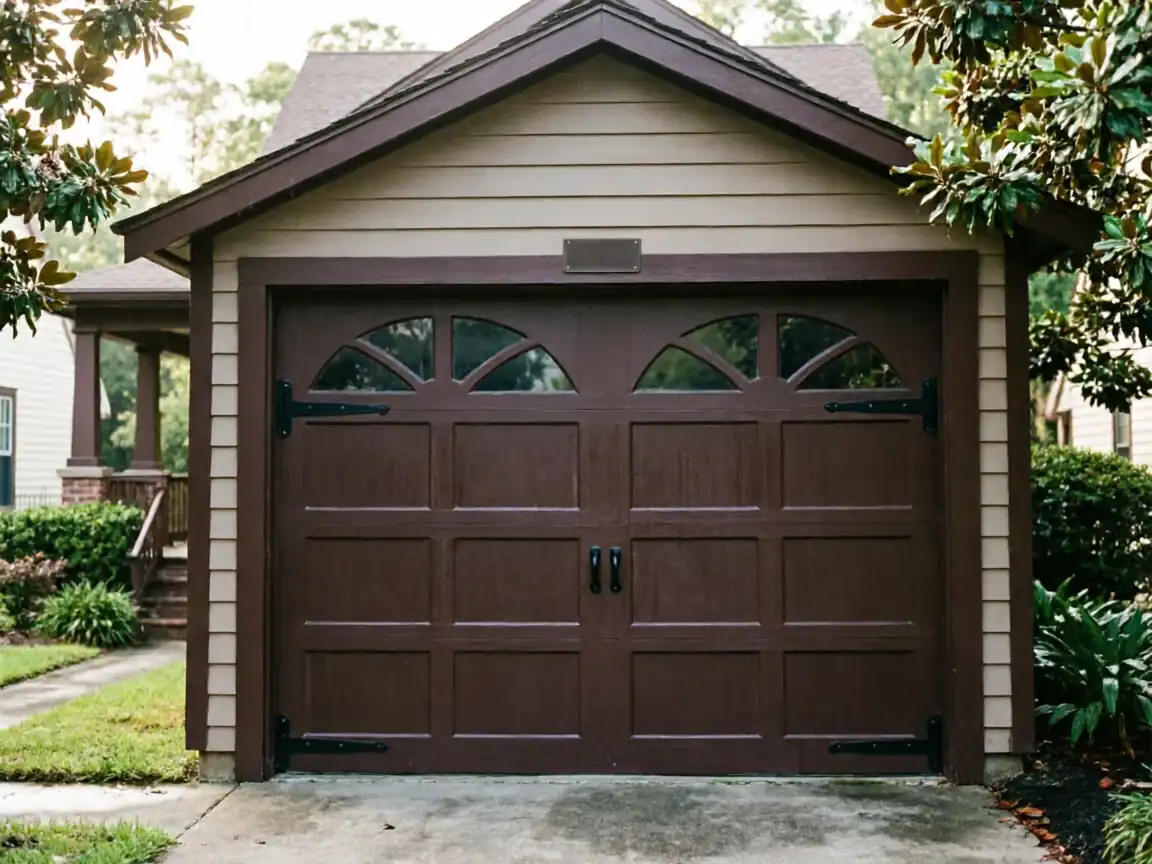
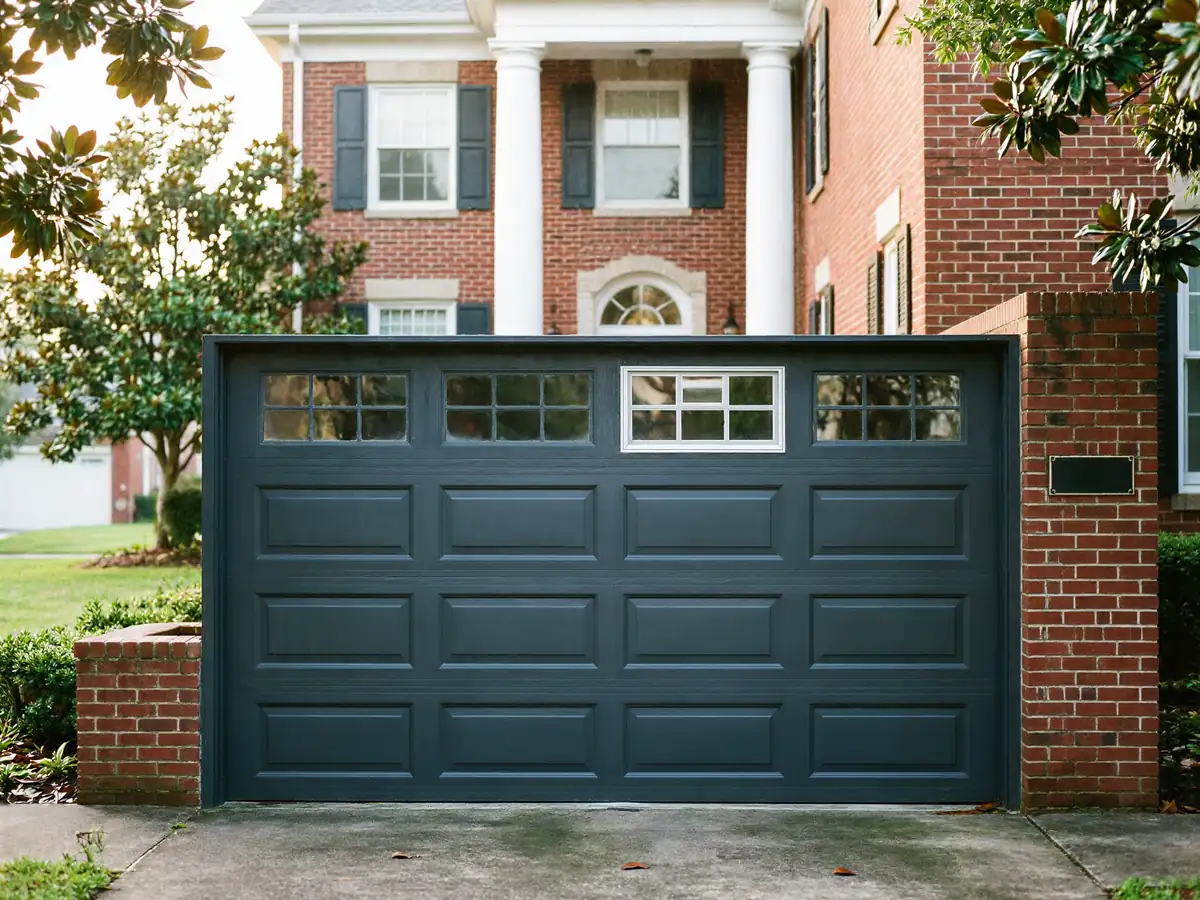
One limitation worth saying plainly: we don't stock every door style on the truck. Custom widths, carriage-style doors, and specialty insulation ratings usually mean a lead time of days, not hours - worth knowing before you set a move-in date around it.