The Symptom
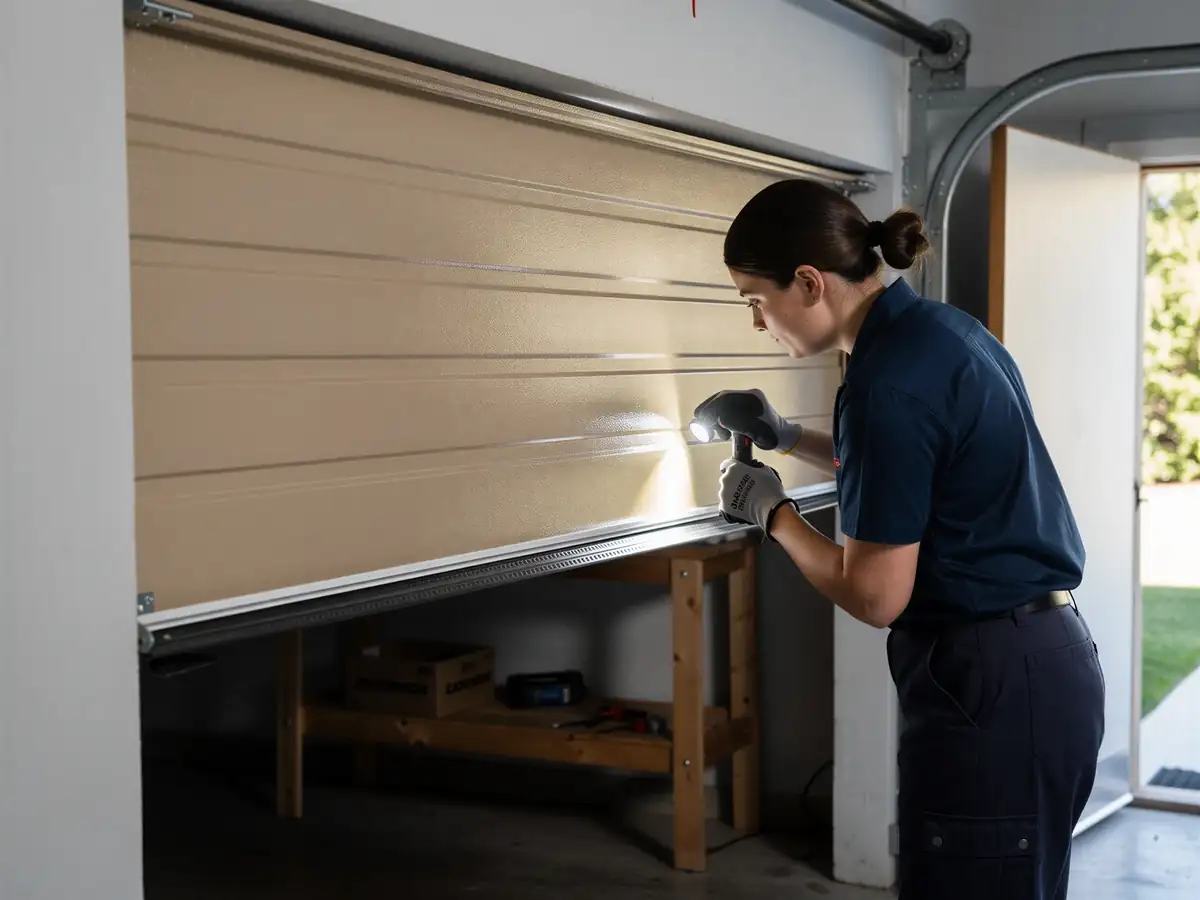
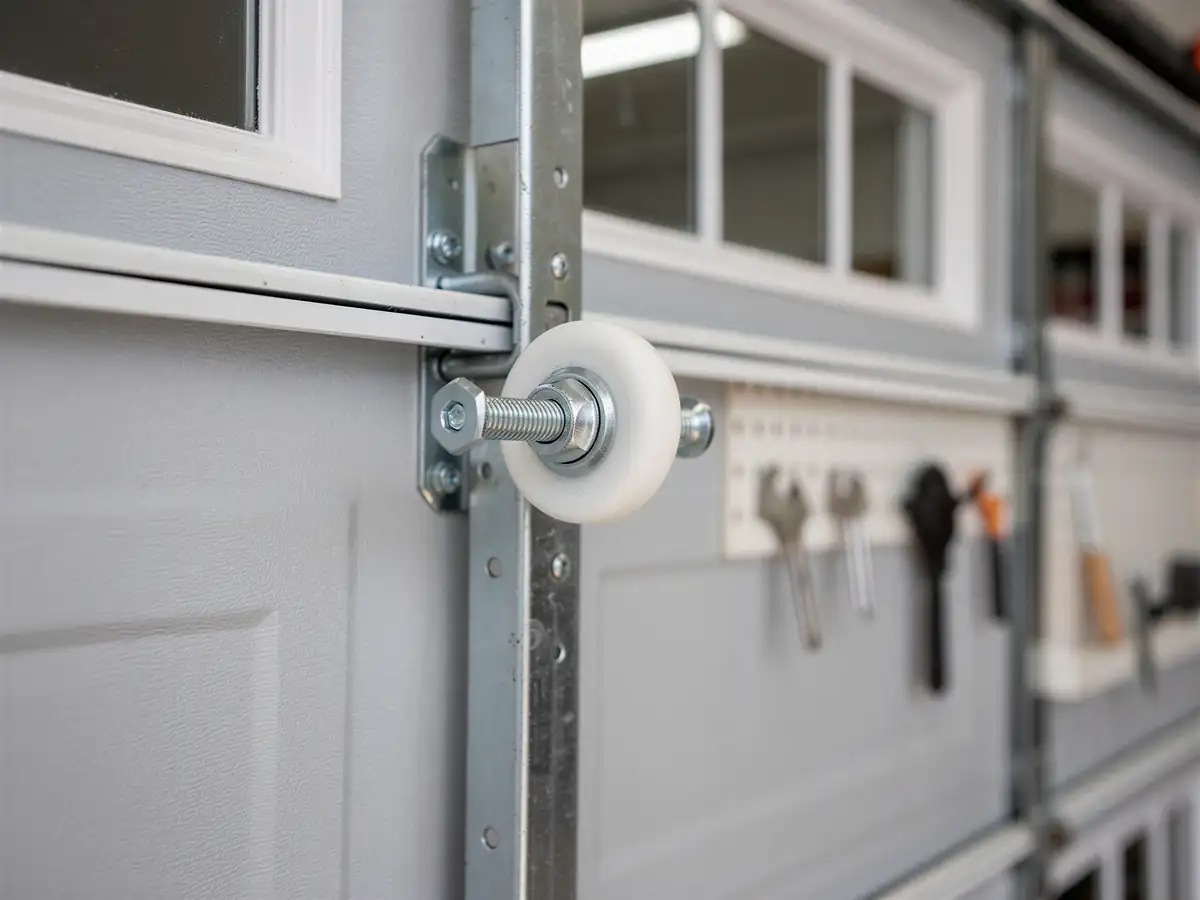
If your door sounds like it's dragging a chain over gravel every time it opens, or it jerks and hesitates partway up the track, the rollers are usually the reason, not the opener. Nylon rollers wear down and flat-spot. Steel rollers with bad bearings start grinding, and you'll hear it before you see it. Some owners notice the door seems to walk sideways in the track right before a roller fails completely, which is the door trying to ride on a wheel that's no longer round.
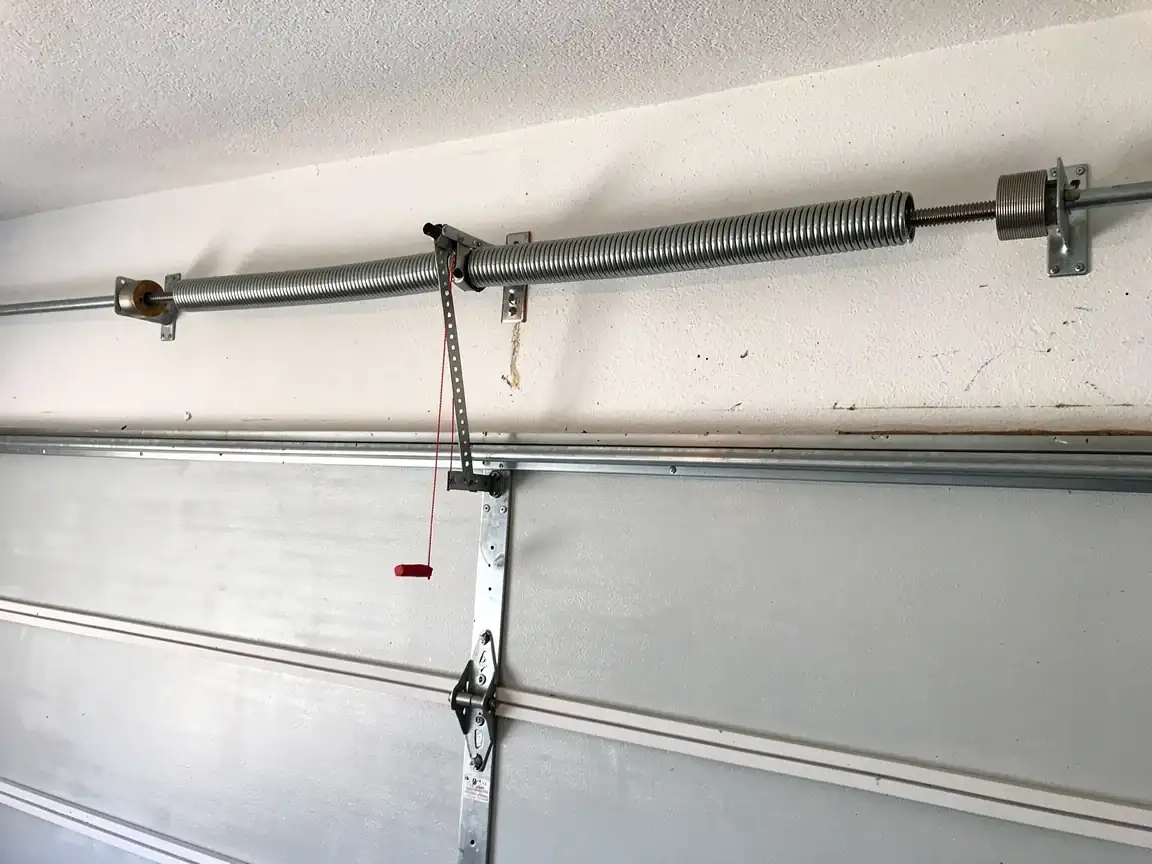
A single bad roller near the bottom of a panel usually just makes noise. A bad roller up near the top, close to the spring and cable system, tends to cause more drag on the opener and can speed up wear on the track itself. Either way, rollers rarely fail quietly - you get the warning sound for weeks before one finally seizes or cracks.
Across the Midlothian service area - from Brandermill and Woodlake out to Bon Air, Manchester, and the Charter Colony side of things - this is one of the most common calls we get that isn't a spring or an opener board. It's mechanical wear, and it's predictable once you know what to look for.
What Causes It Around Here
Housing stock matters more than people think. Across the service area, most homes were built between 1954 and 2005, with the bulk of that going up in the 1960s and 70s across the 18 or so named neighborhoods we work in. Doors and track hardware installed in that era, or replaced once since, are now old enough that the original rollers - often stock nylon or basic steel - are past their rated cycle count. A door opening and closing twice a day for 40-plus years puts a lot of wear on an 11-ball bearing.
Climate plays its part too. This area sits in a cold-moderate band, which means the garage sees real temperature swings between winter mornings and summer afternoons. That swing makes nylon rollers brittle faster than they'd wear in a milder climate, and it also means track alignment shifts slightly with seasonal expansion and contraction in the framing. A roller that's borderline worn will show its wear exactly when the cold snaps hit, because the nylon stiffens and stops absorbing small misalignments the way it did when it was new.
Put those two together - older housing stock and real seasonal swings - and roller wear shows up earlier here than it would in a newer subdivision or a warmer climate.
The DIY Question
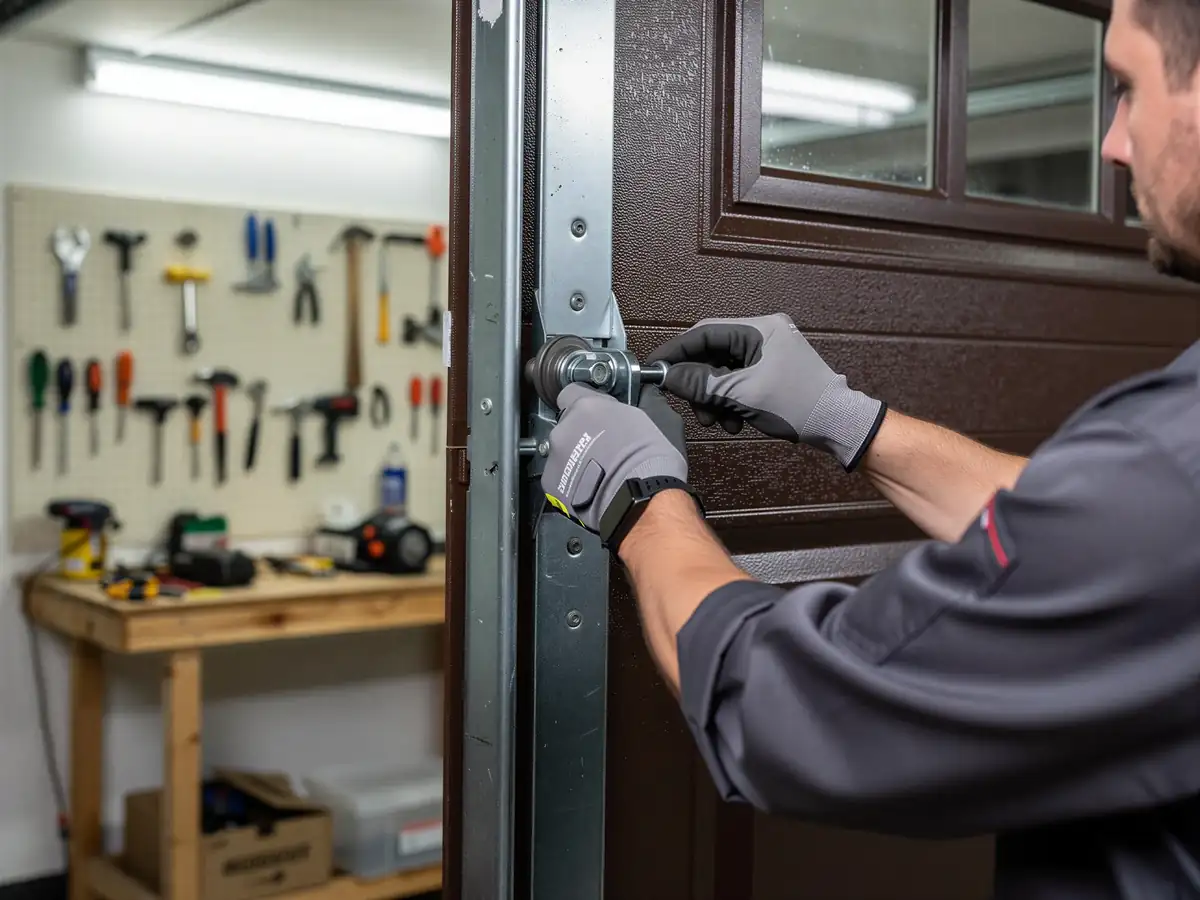
Swapping a roller is mechanically simple in theory
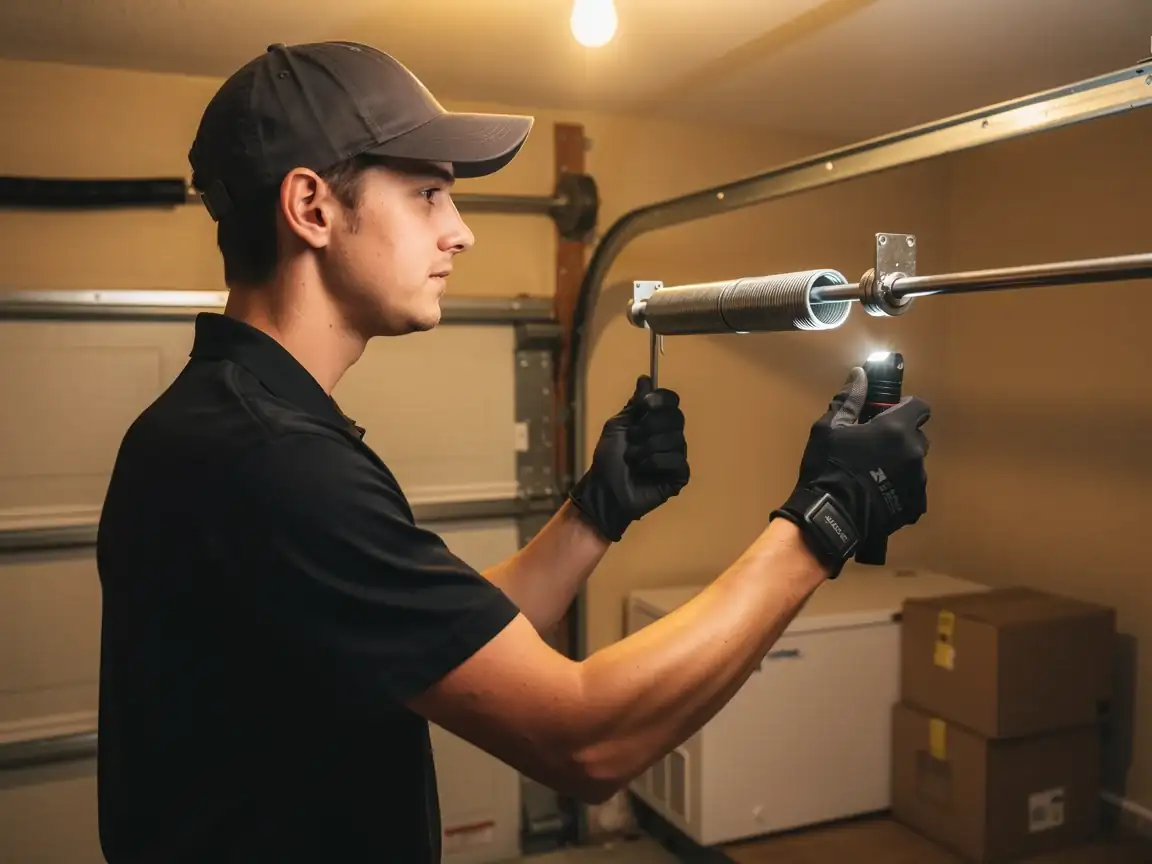
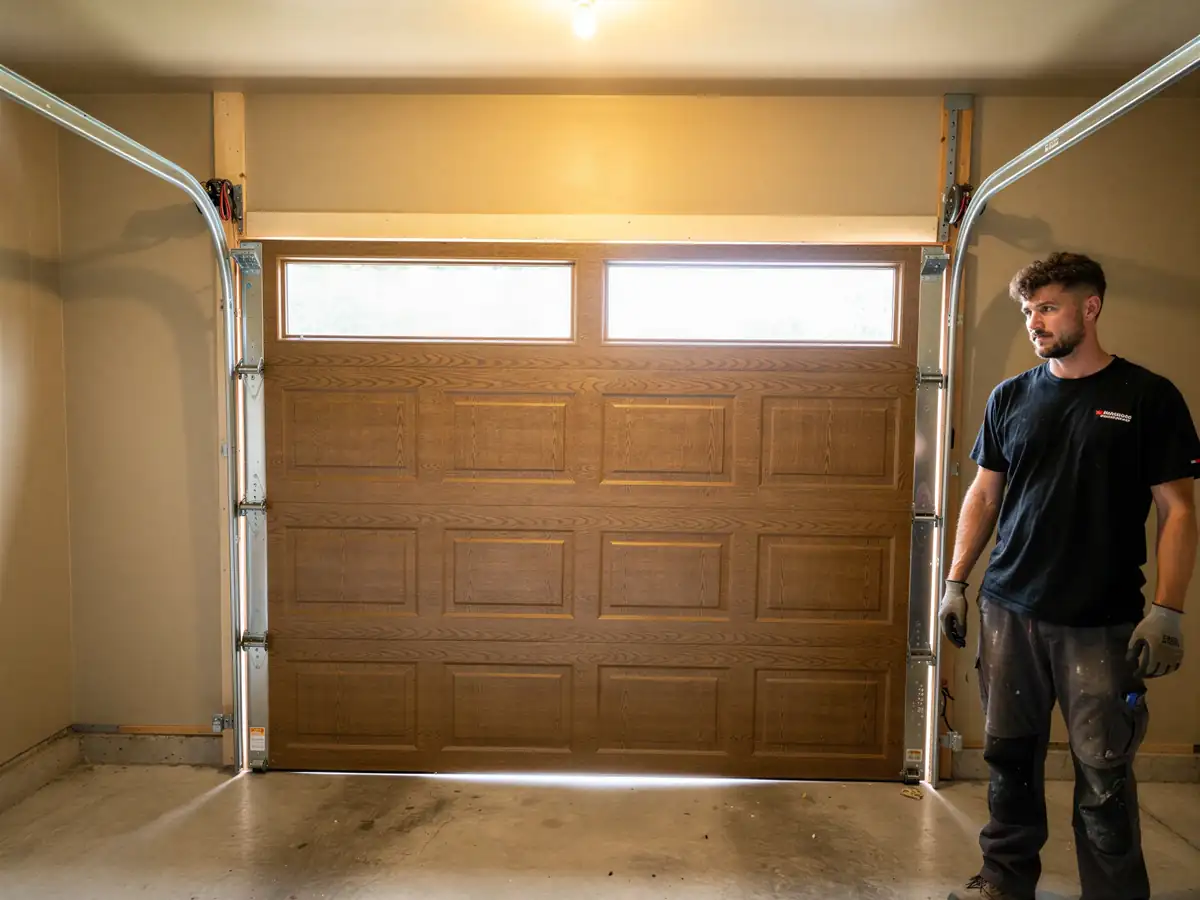
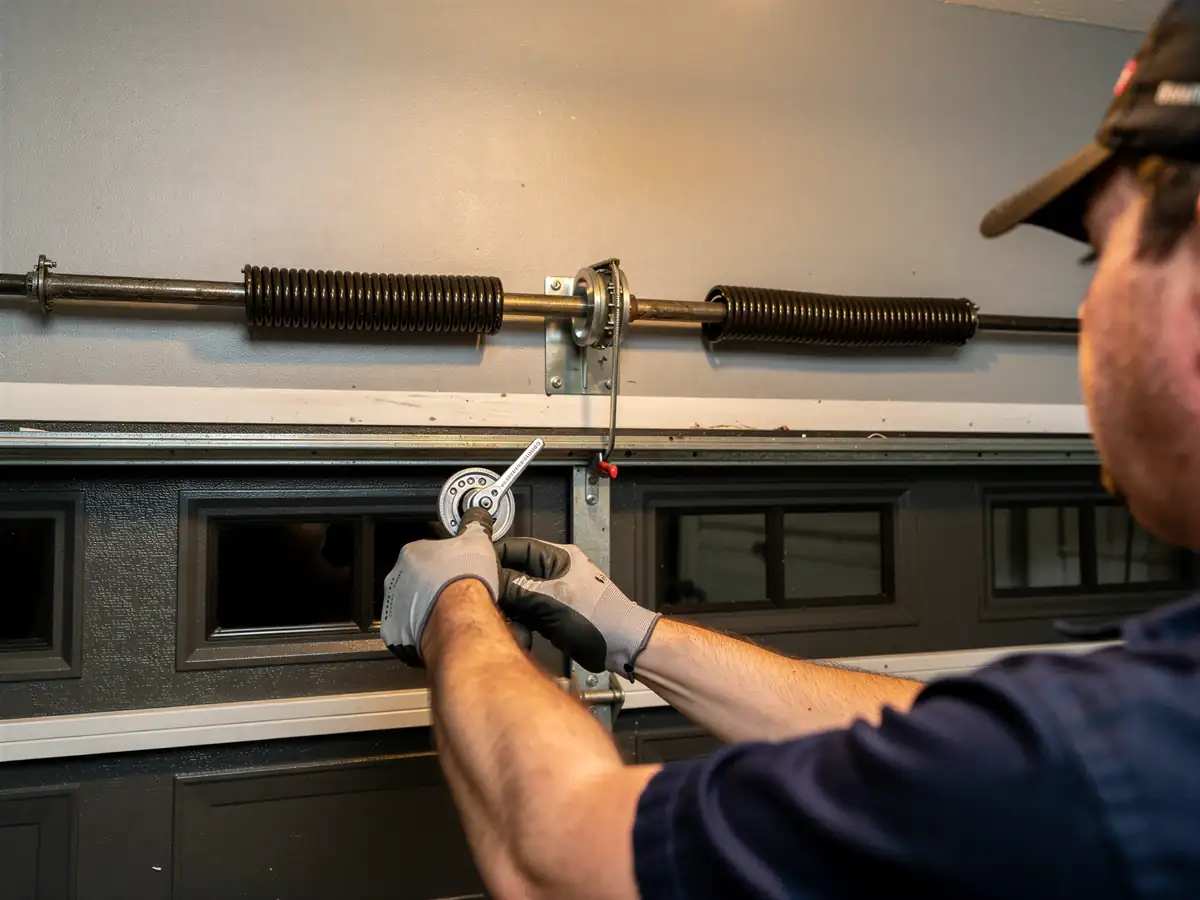
Pop the roller bracket, slide the old roller out of the track, slide a new one in. In practice, the rollers near the bottom brackets are under cable tension and the ones near the top are close to the spring system. If you don't know which bracket is load-bearing and which isn't, you can end up with a door that drops or a cable that whips loose.
If you've got a single roller near the middle of the door making noise and no other symptoms
And you're comfortable with hand tools and keeping your fingers away from a loaded spring, a basic nylon roller swap is within reach for a careful homeowner. We'd still tell you to replace rollers in sets rather than one at a time, since the others are usually close behind.
Where we'd say stop
If the noise is coming from a top roller, if the door is sagging on one side, or if you're not sure whether a bracket is under tension. That's not a DIY afternoon, that's a trip to the ER with a wrench still in your hand if it goes wrong. We're honest that this is one of the lower-skill garage door repairs, but
Where This Job Goes Sideways
placeholder