What Local Conditions Do
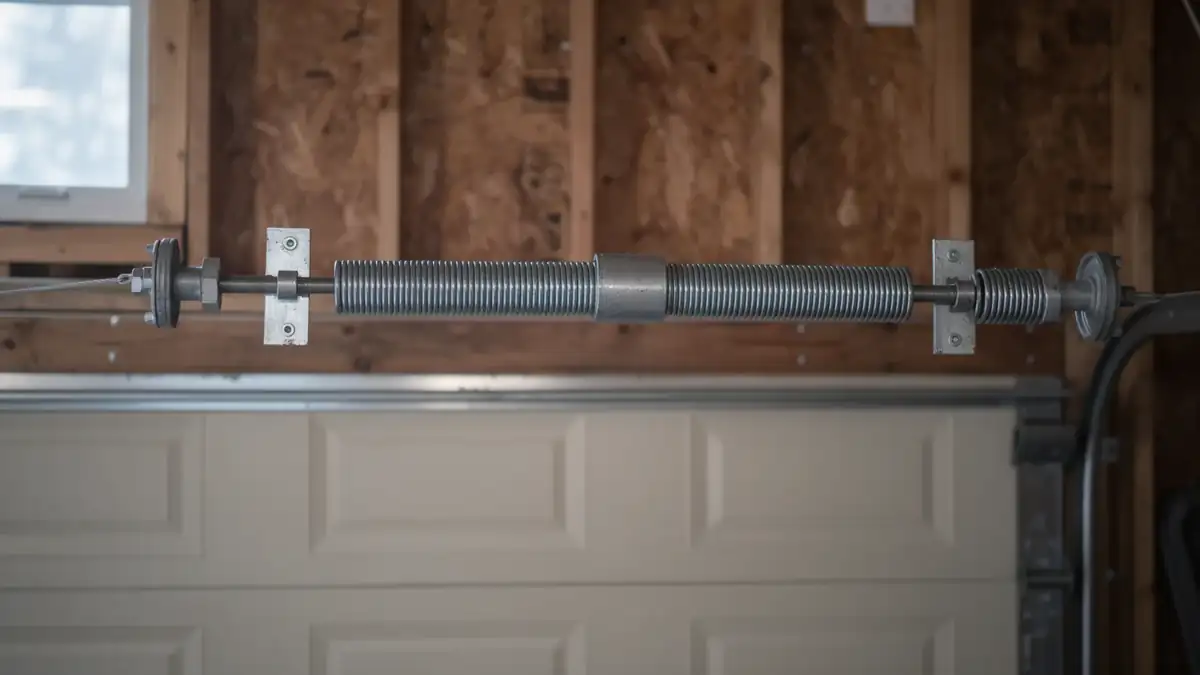
Midlothian sits in a cold-moderate climate band, which means the ground and garage interiors swing through real temperature drops most winters, but not the deep-freeze extremes you'd get further north. That matters for springs because steel contracts as it cools, and a torsion spring that's already fatigued from age loses a little flexibility with every cold morning. It's not the cold alone that snaps a spring - it's cold working on a spring that was already near the end of its cycle count.
Most houses in this service area went up between 1954 and 2005, with the bulk of the stock dating to the 1960s and 70s across the eighteen named neighborhoods in the wider area. A spring installed when a house in that era was built, or even replaced once since, is old enough now that cold-weather failure isn't a fluke - it's closer to the expected end of its life. Houses in Brandermill or Woodlake built in that window are hitting the same wall at the same time, just on different streets.
We don't see the same pattern in new-construction subdivisions, because the springs in those are nowhere near fatigued yet. Age plus cold is the combination that matters, not cold by itself.
When to Get Help
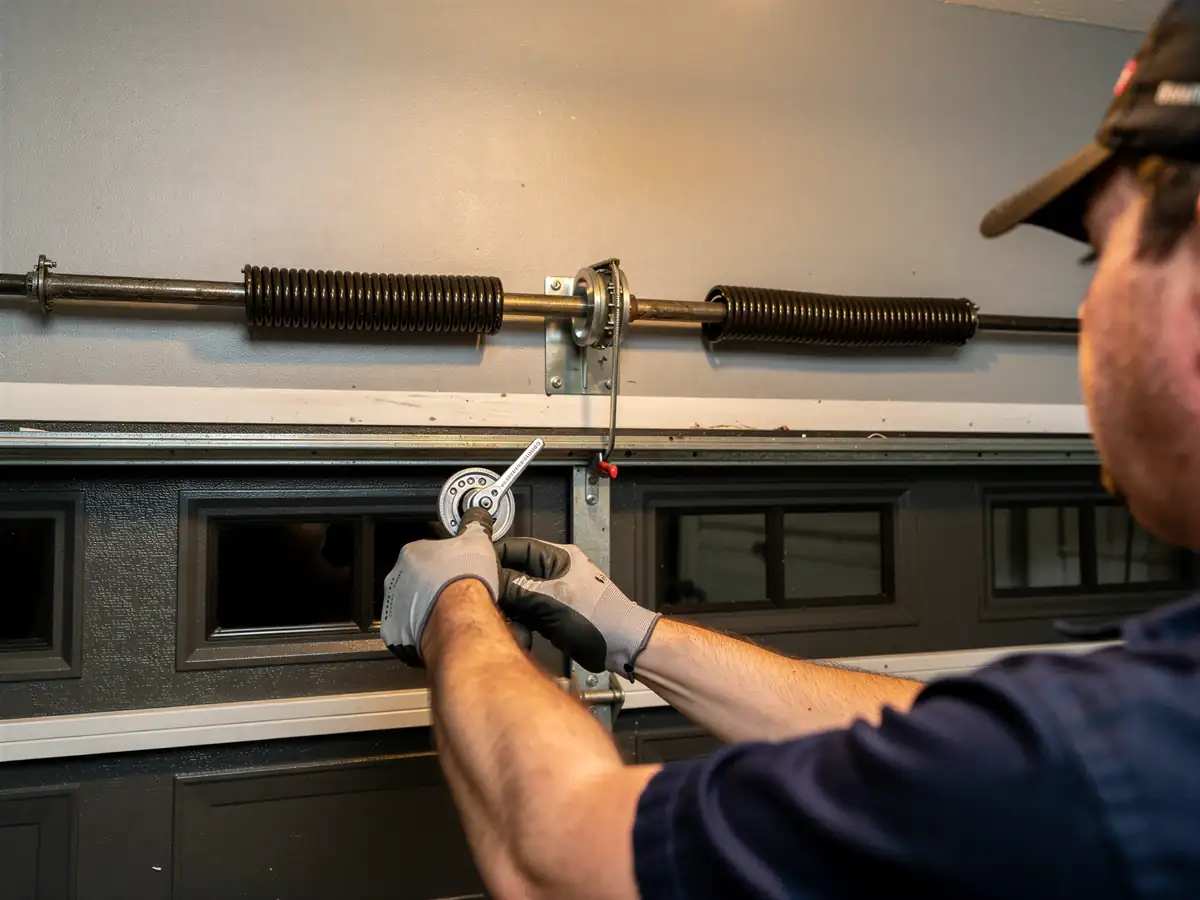
If you hear a bang from the garage on a cold morning and the door won't move, or moves a few inches and stops, that's almost always a broken torsion spring, not the opener. Don't keep hitting the remote - a dead spring means the opener is trying to lift the full weight of the door alone, and that strains the motor and the top panel both.
Call when: the door feels unusually heavy if you try to lift it by hand, you see a visible gap in the coil above the door, or the door slams down instead of lowering smoothly. Any of those on a house from the 1960s-70s stock that makes up most of this area is worth a same-day look, especially once overnight temperatures start dropping.
We don't recommend waiting out a broken spring to see if it's
What Most People Get Wrong
The most common mistake is assuming a cold-weather spring break means something is wrong with the door or the opener
It usually doesn't - the spring just reached the end of its cycle life, and cold temperatures were the final push. Replacing the opener instead of the spring is a waste of money and doesn't fix the actual problem.
The second mistake is replacing one spring on a double-spring setup
If a house built in the 1960s-70s stock common to this area still has its original pair, and one breaks, the other is close behind. We don't install just one side on a two-spring door - it's false economy, since you'll be back out for the second spring within months.
The third mistake is DIY
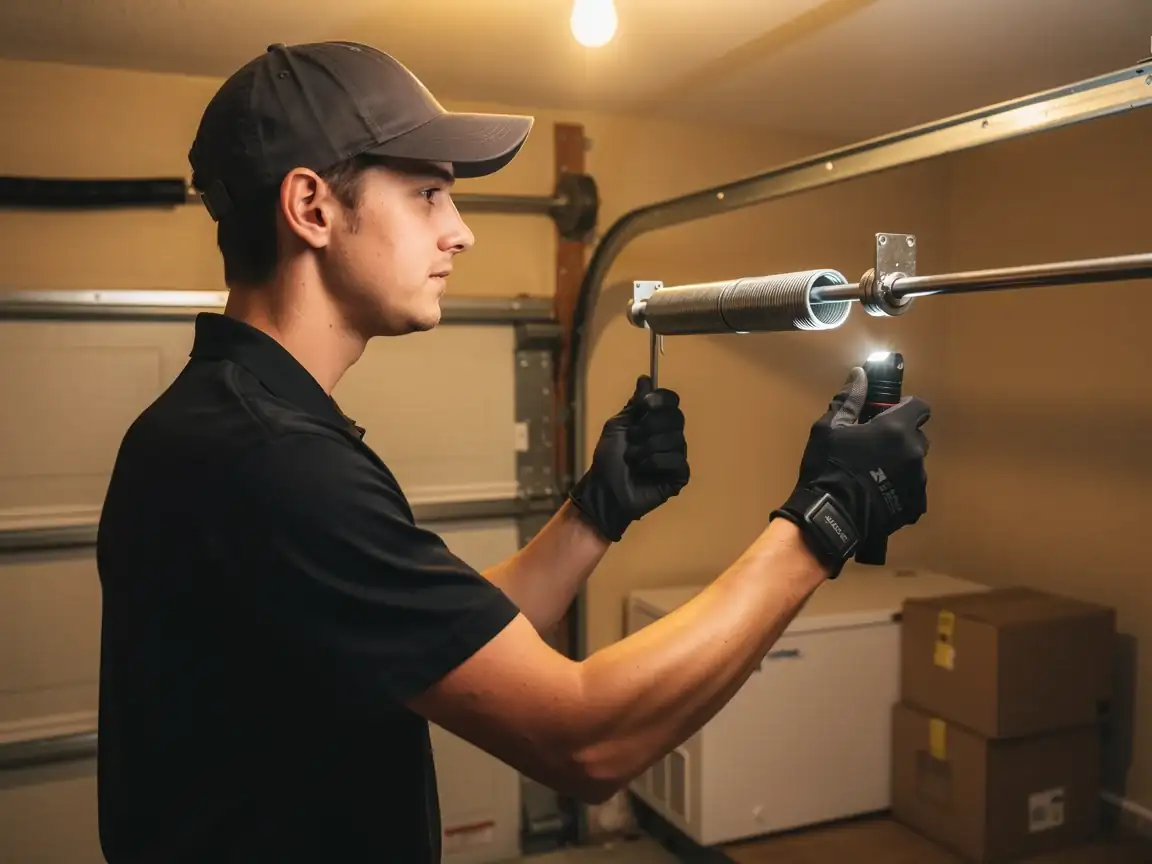
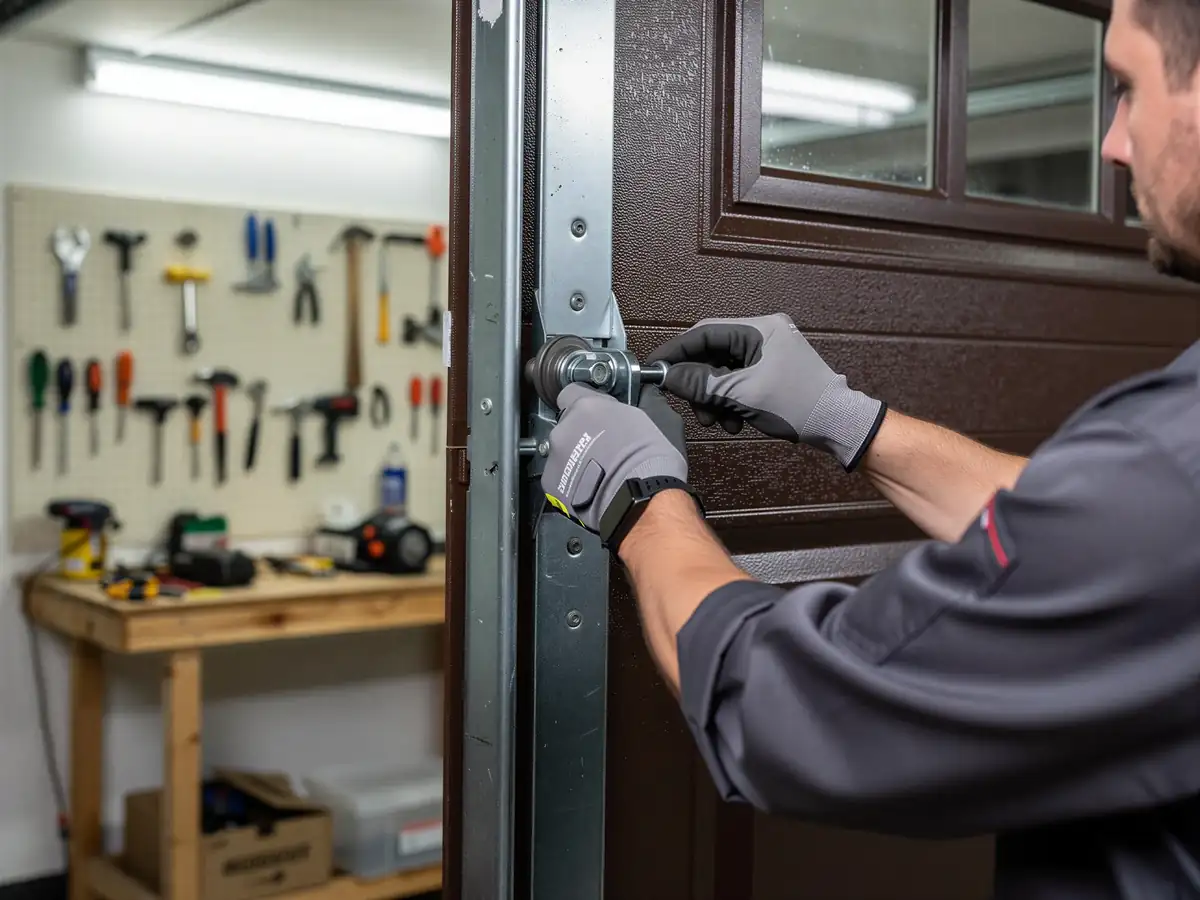
Torsion springs are under real tension and a slip while winding or unwinding one can cause serious injury. We don't walk homeowners through doing this themselves over the phone, and we won't sell parts for someone to attempt it solo. That's one job worth paying a trained hand for, every time.
The Situation
Across the service area, roughly 32,837 of the 72,105 households own their house outright, with a median income around $69,917. That's a population largely invested in keeping an aging house running rather than replacing it outright, which is exactly the right instinct with garage door hardware - most problems are a parts fix, not a full replacement.
Given the 1954-2005 build range, with median construction around 1979, the springs most likely to fail this winter were installed on houses already decades old. Neighborhoods like Charter Colony sit close enough that a cold snap tends to generate calls from several of them within the same week. That clustering isn't coincidence - it's the same housing stock aging on the same climate schedule.
We can't predict the exact week a given spring will go. What we can say is that in this climate band, cold mornings are when years of wear catch up with steel that's been flexing since the Carter administration in a lot of these houses.