Getting It Booked In
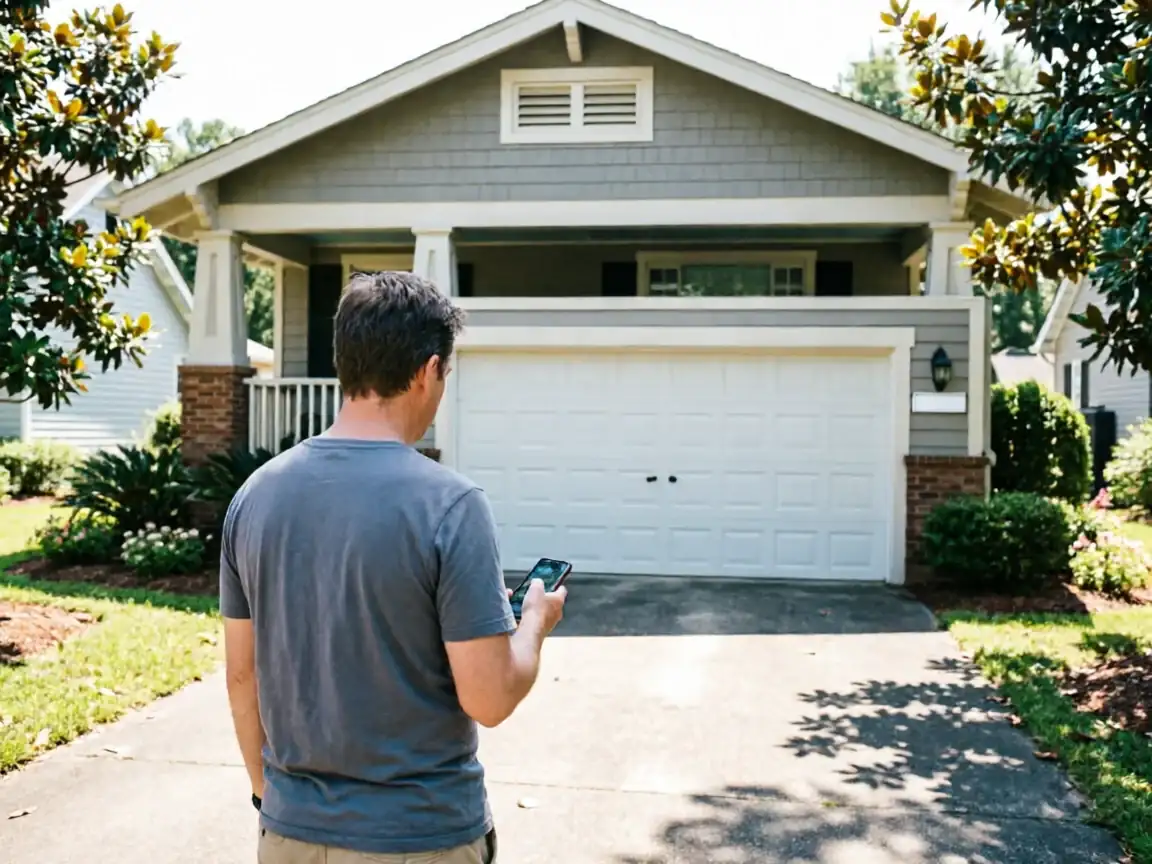
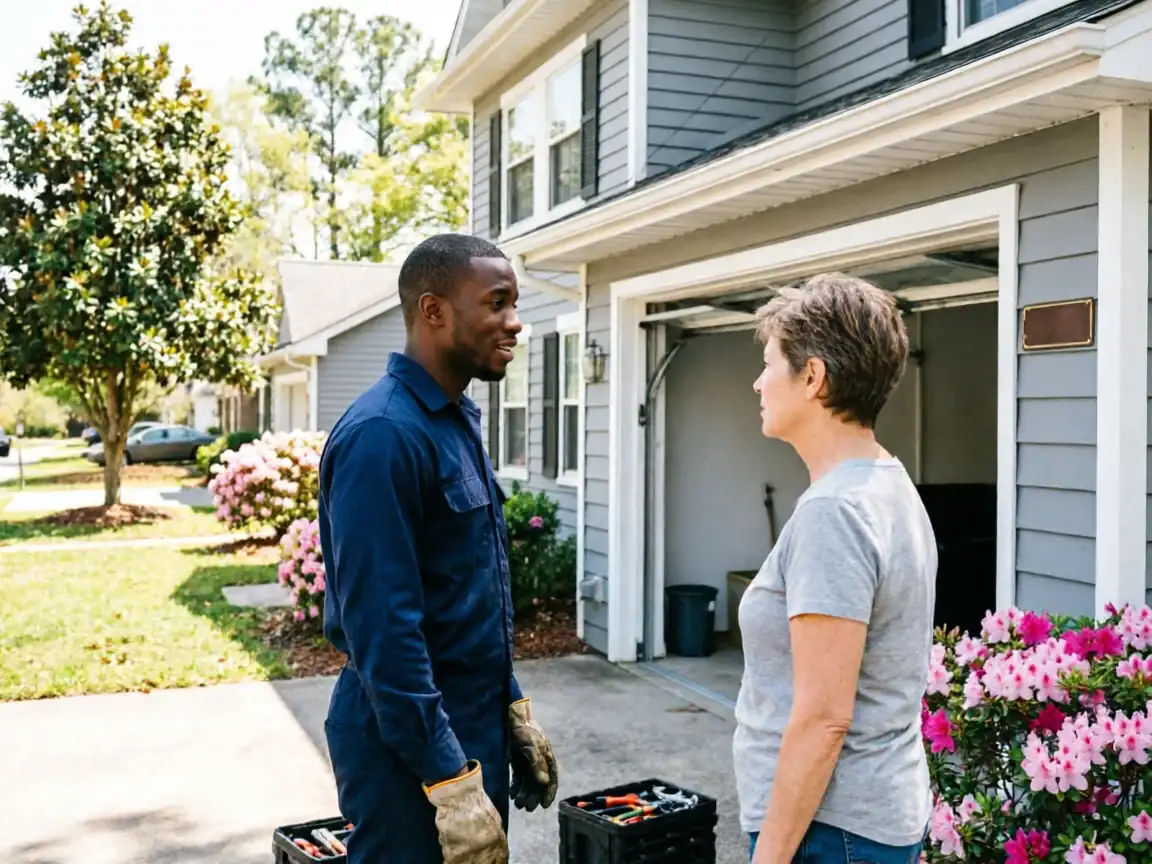
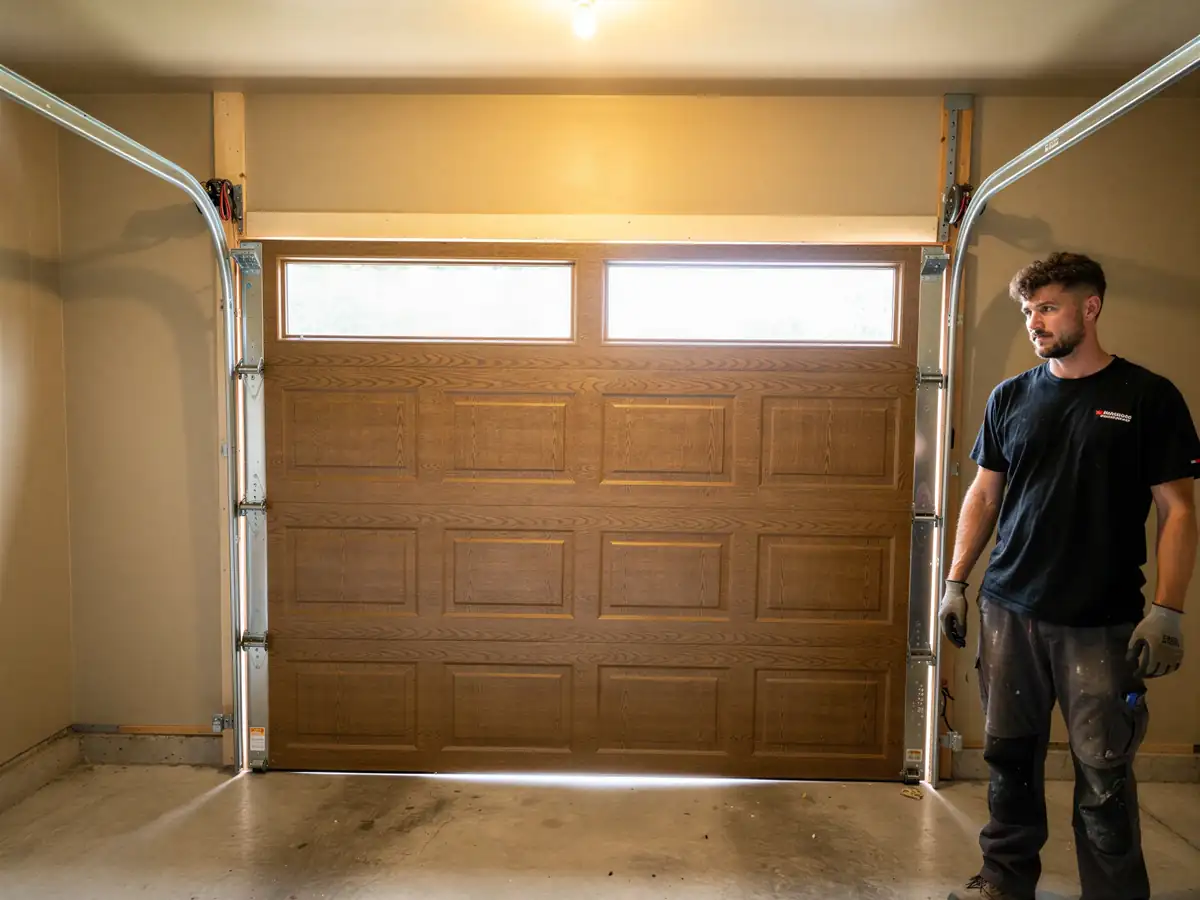
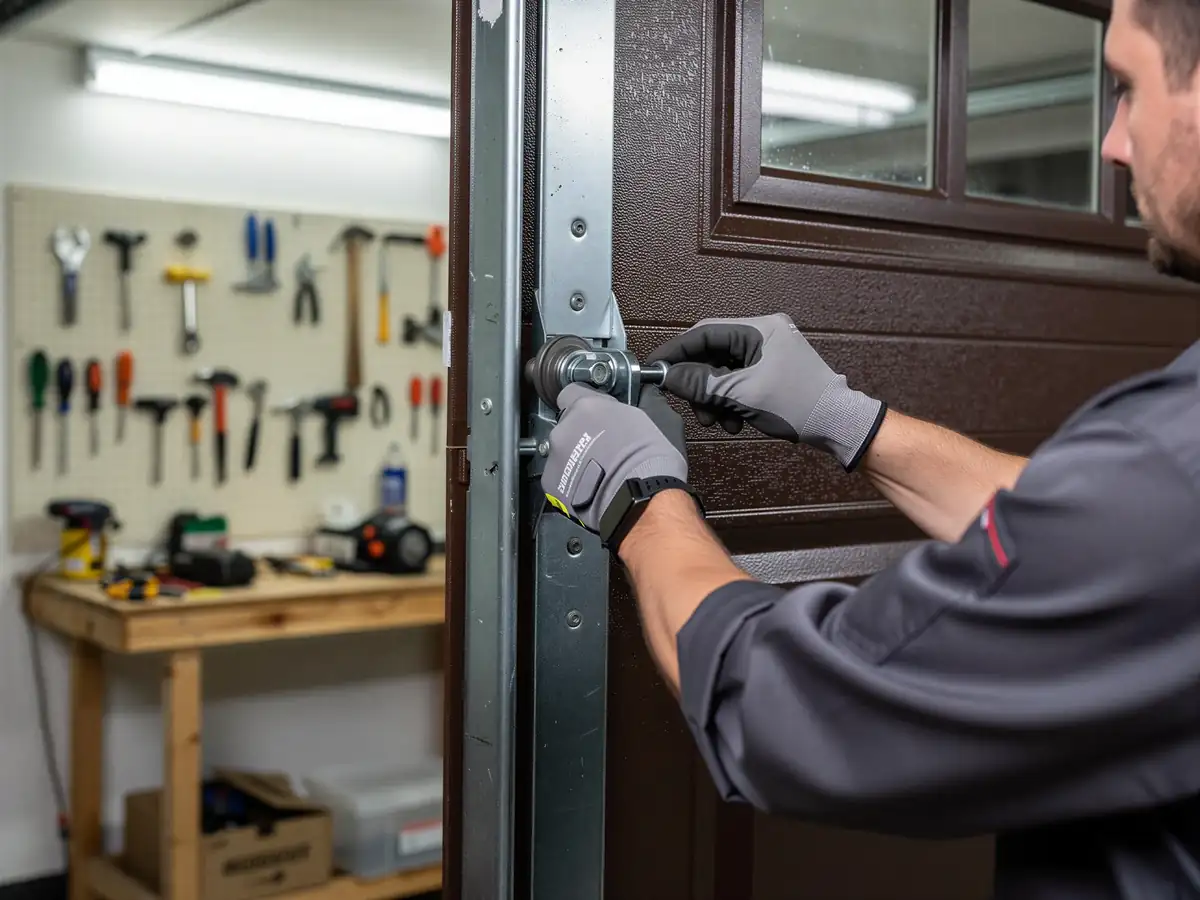
We run this job out of Midlothian, about 5 miles from Woodlake, so there's no local branch to call - just a truck that comes to you. When you call, tell us the door is stuck shut or has a loud bang from the ceiling; that tells us it's almost certainly a spring, not the opener, and we bring the right stock instead of guessing. Woodlake is a smaller pocket than some of the other areas we cover - about 2,701 households - which means we're not juggling a dozen calls a day from this particular neighborhood. That's worth mentioning because it's part of why we can talk through the actual problem on the phone instead of rushing you off it. We still ask the same questions everywhere: one door or two, how old is the opener, does the door drop fast or just refuse to move. If you've got a torsion spring system (most doors from this era do), we'll usually know what size and wind direction to expect before we're in the driveway.
What You Pay
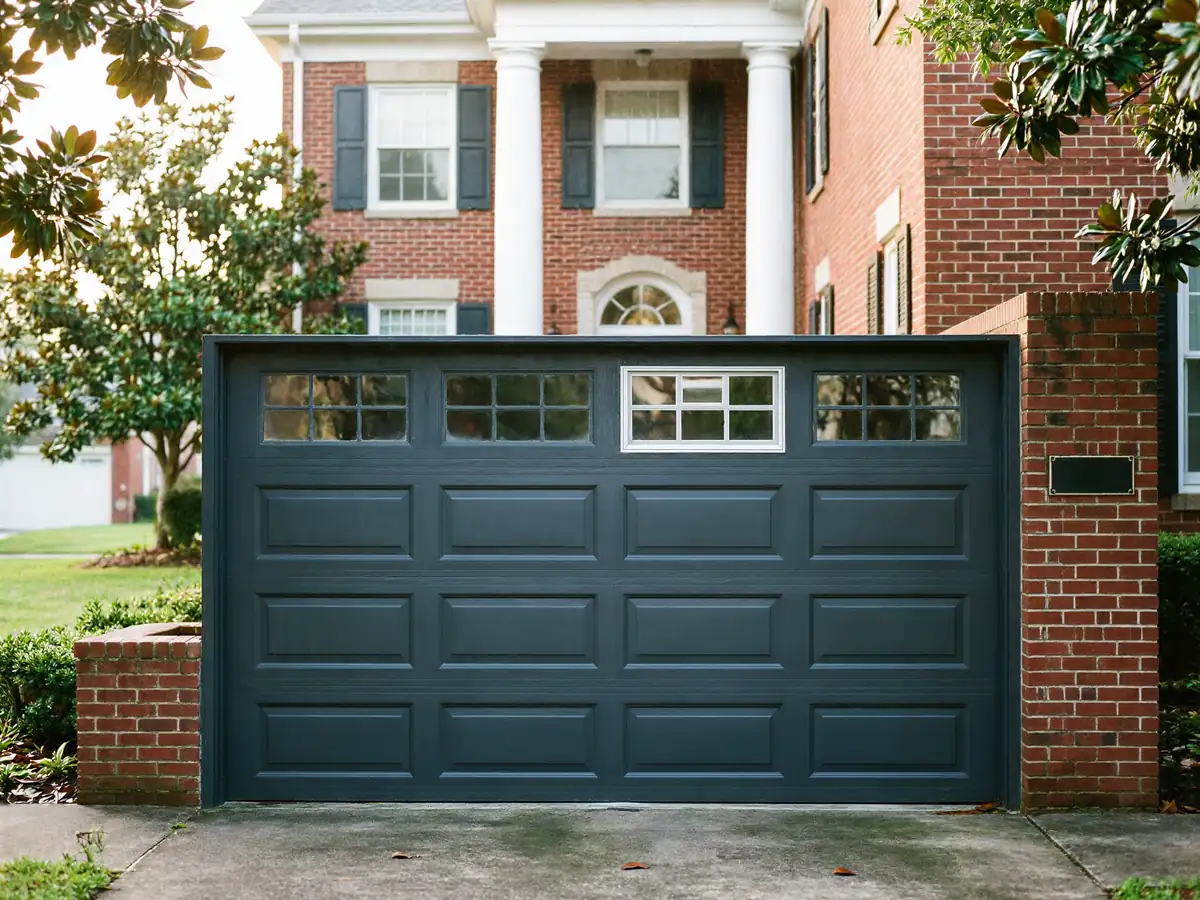
We don't post a flat number here because spring jobs vary with door weight, whether it's one spring or a matched pair, and whether the drums or cables need attention too. What we can say is that Woodlake's median household income, at $133,782, runs well above the broader service area's $69,917 - and that shows up in what we see on site: more double-door torsion setups with higher-cycle springs already installed by a previous owner or builder upgrade, rather than the bargain single-spring jobs common in older, lower-cost housing stock nearby. That doesn't mean your repair costs more by default. It means the parts on your door are often a step up from base-grade, and replacing one spring with a mismatched cheaper one is a bad trade - we'll tell you if that's what's on your door and what the better option costs instead.
What Causes It Around Here
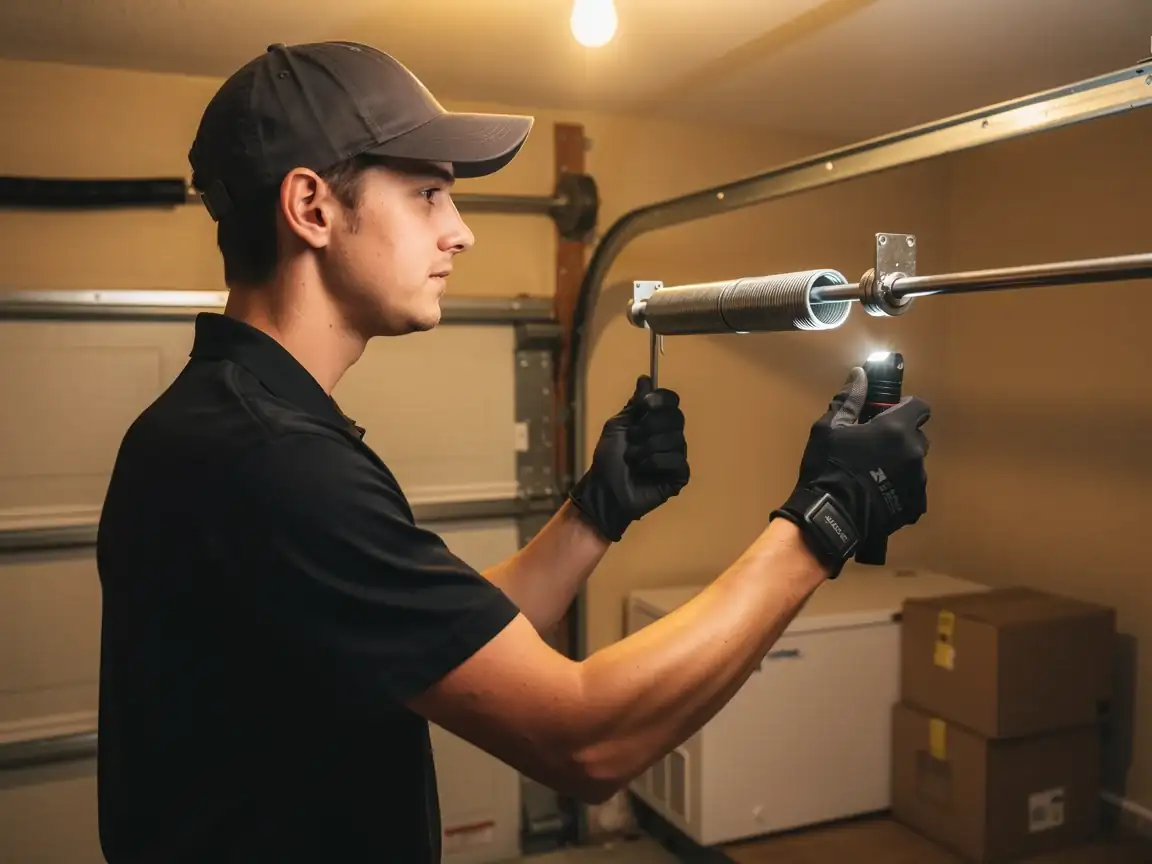
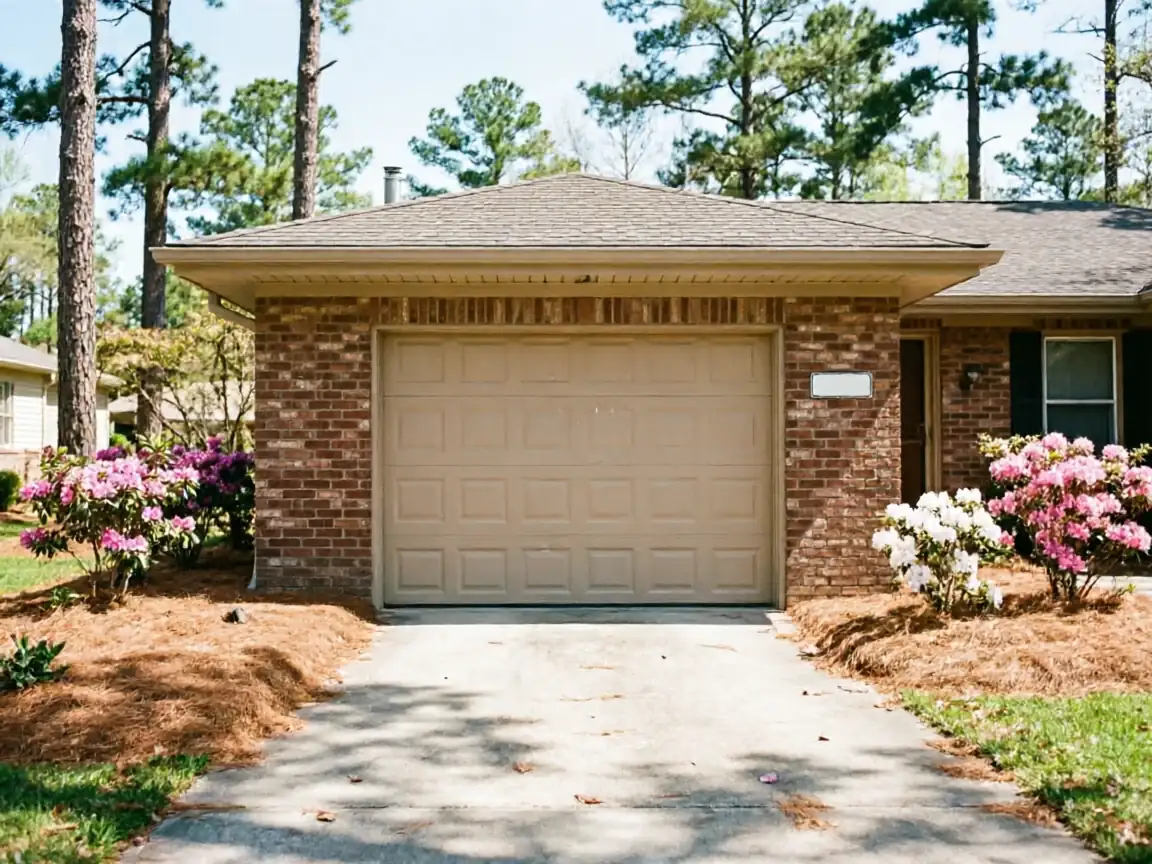
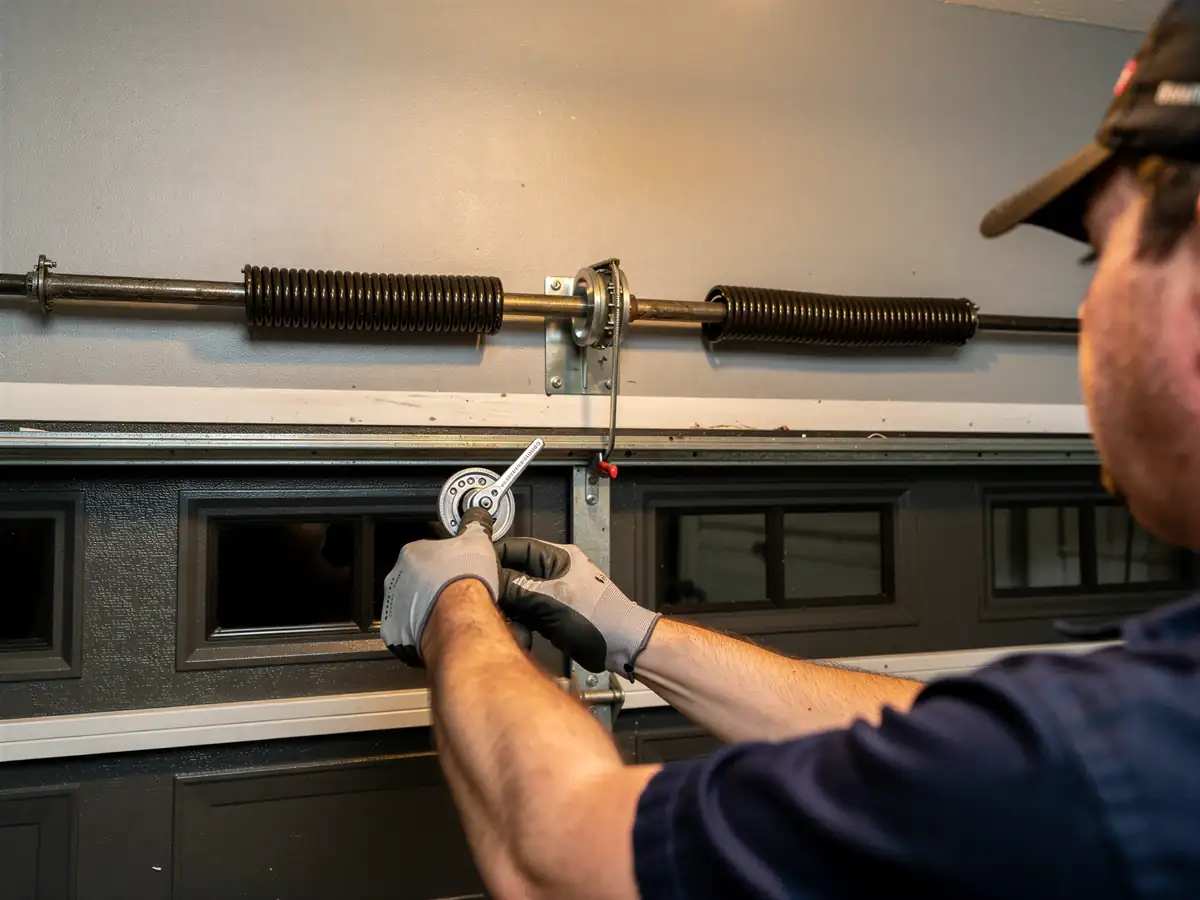
A torsion spring is rated for a set number of open-close cycles, and most residential springs are built for somewhere in the 10,000-cycle range before metal fatigue takes over. A house built in 1989 puts that door at roughly three and a half decades of service - plenty of time to burn through the original spring's rated life even at normal, unremarkable use. That's the main thing we see in Woodlake: not storm damage, not a one-time accident, just a spring that's done the number of cycles it was built for and let go, usually with a loud crack rather than a slow fade. The cold-moderate climate here doesn't help long-term metal fatigue the way a milder region would, though it's not the dominant factor the way age and cycle count are. If your door is original to the house, age is the first thing we check, not the last.
The Symptom
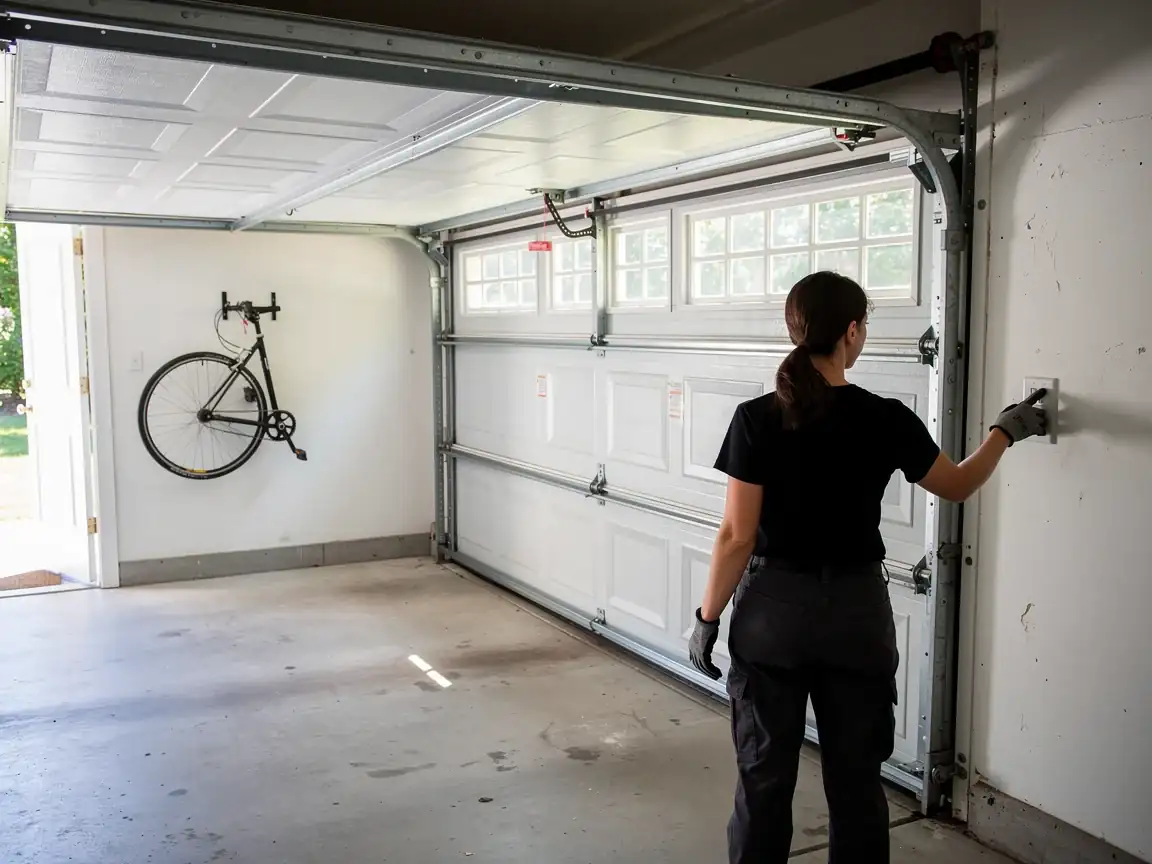
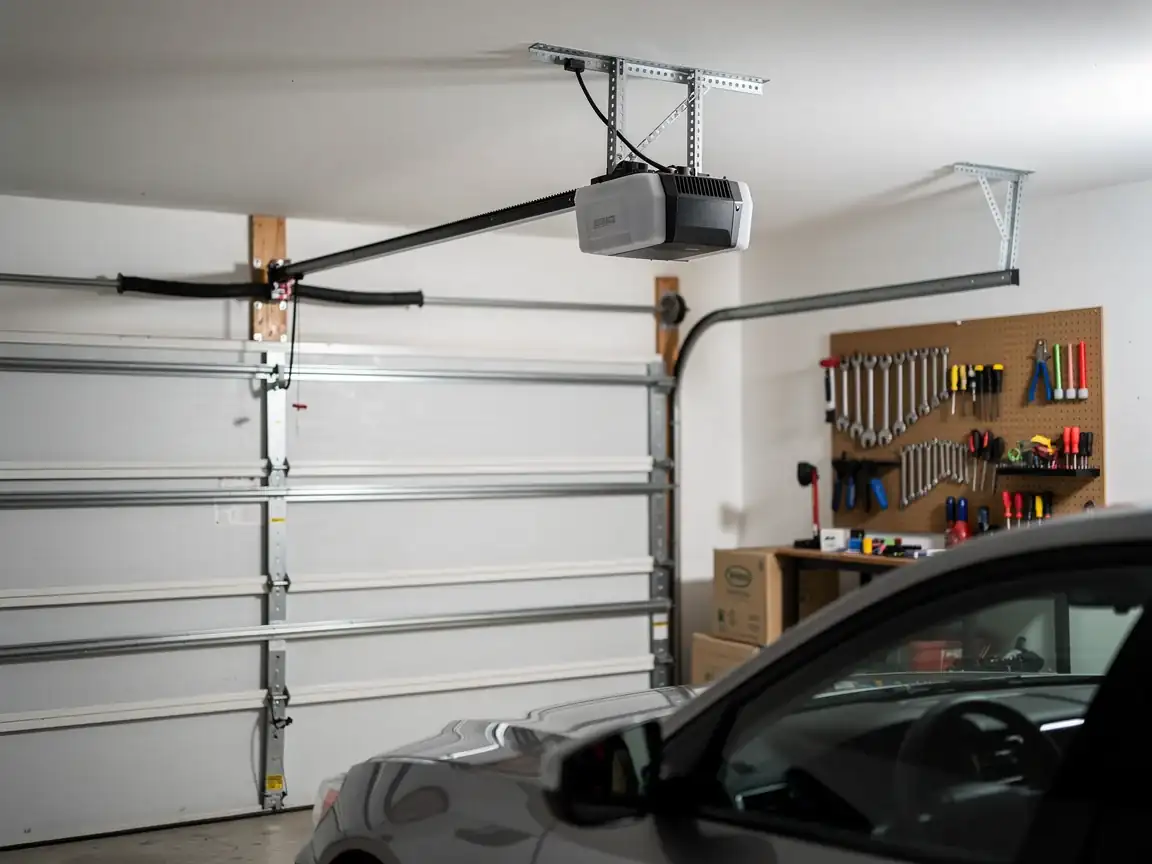
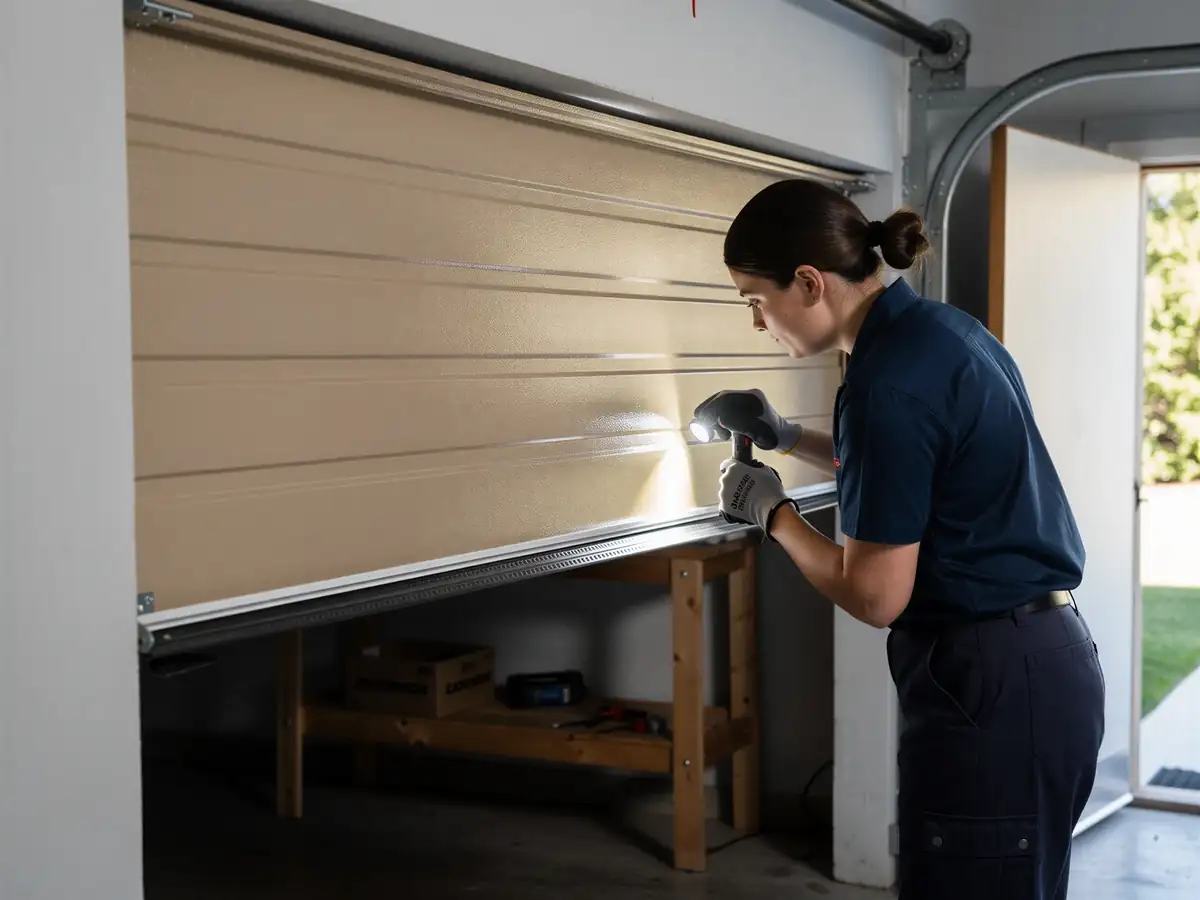
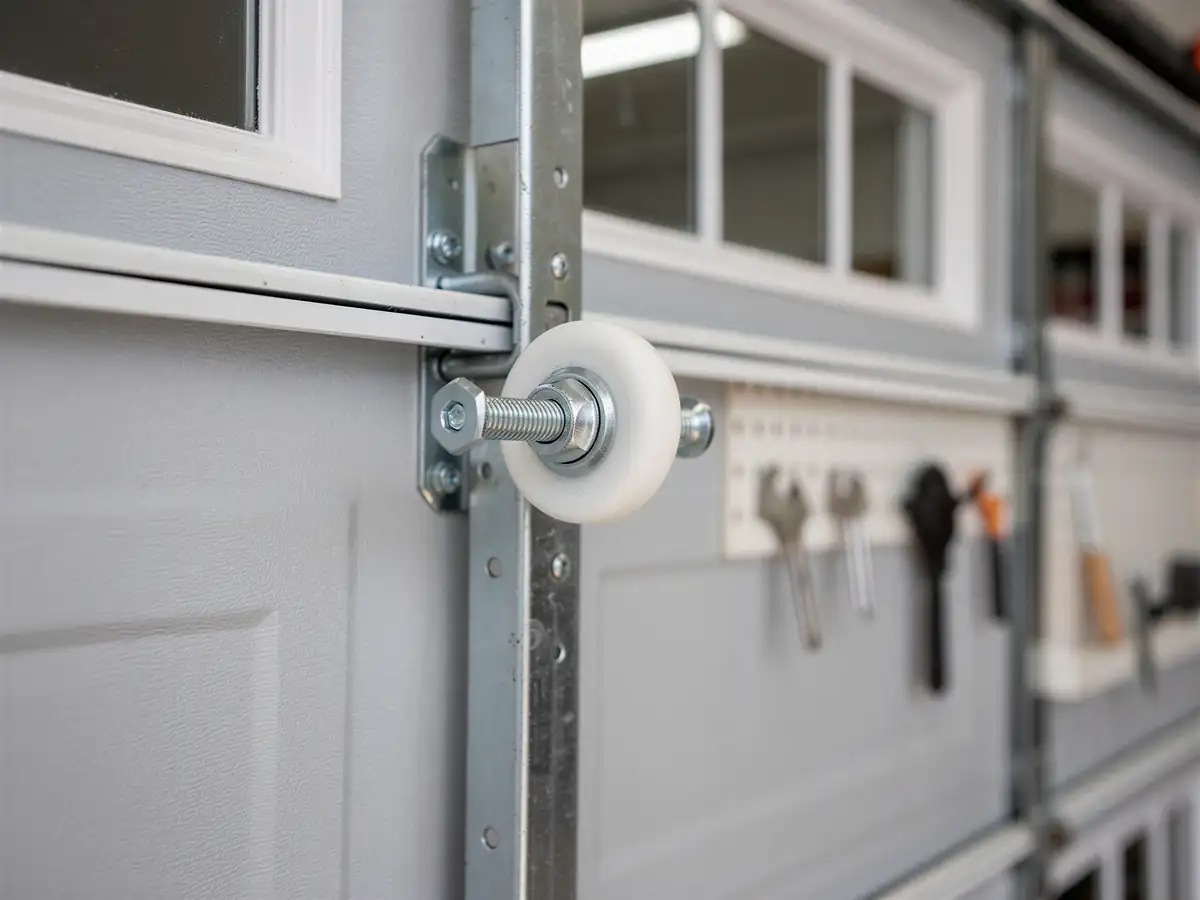
The classic sign is a door that won't open at all, or one the opener tries to lift and then stalls or reverses. If you pull the emergency release and try by hand, a broken torsion spring makes the door feel like it weighs twice what it should - because without the spring doing its job, you're lifting the full weight of a steel door on your own. Sometimes it's quieter: a visible gap in the spring coil sitting above the door, which means it's already separated and just hasn't dropped the door yet. Don't keep running the opener against a broken spring - it strains the motor and gears for no benefit, since the opener was never built to lift the door's full weight by itself.